Too many children remanded in custody
A new (27 May 2026) thematic report by HM Inspectorate of Prisons finds that children are too often held in custody while awaiting trial or sentencing, even when professionals believe they could be safely and more cost-effectively managed in the community.
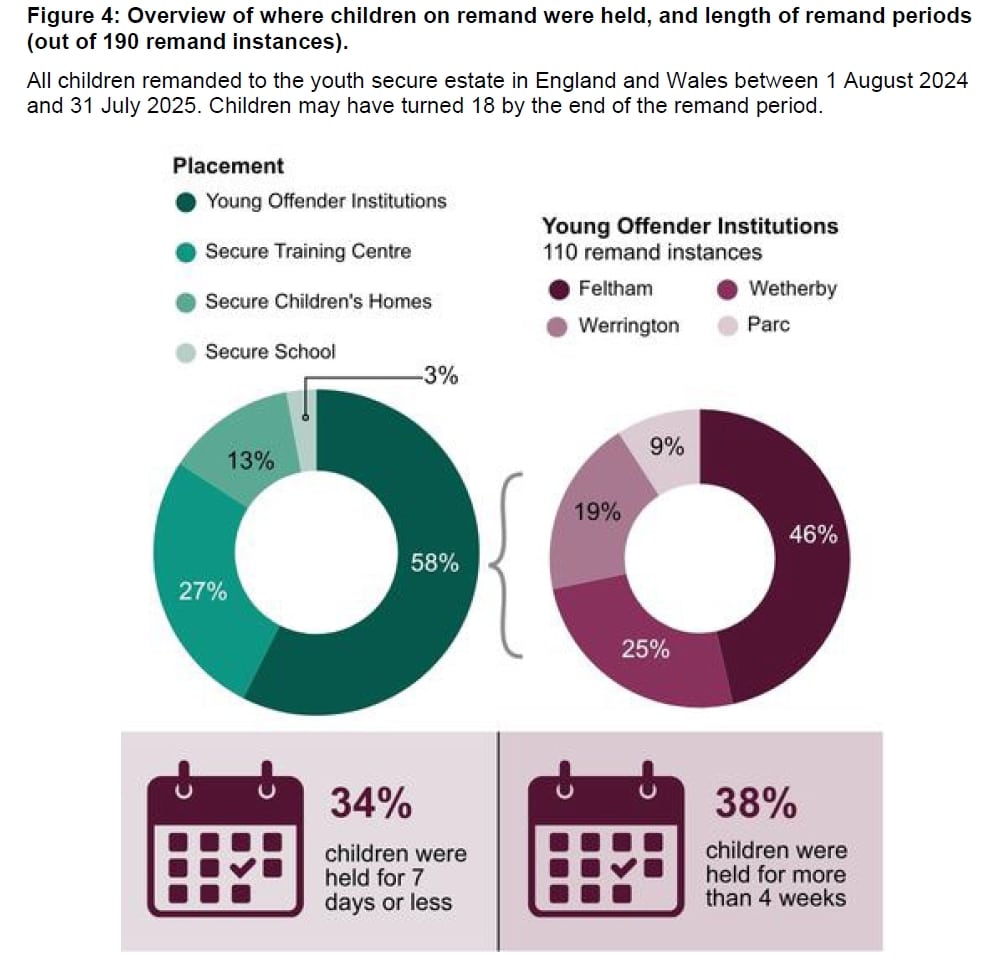
Between 1 August 2024 and 31 July 2025, 190 children were remanded to custody before subsequently being bailed, with over half held in young offender institutions, where levels of violence remain higher than in any adult prison. Almost half of the remanded children spent just two weeks or less in custody, and these short stays meant they received little or no access to meaningful education or support.
The report
The report uses a case study approach, the inspectorate selected a sample group of 25 children who had been remanded for seven days or less. As well as carrying out a detailed case file review, inspectors conducted interviews with YJS workers, resettlement practitioners in custodial settings, and the children themselves. They also visited some of the new initiatives established to support children in contact with the youth justice service.
The background
In the year ending March 2025, children on remand made up 41% of those in young offender institutions (YOIs) and the secure training centre (STC), compared with just 21% in 2016. The proportion held on remand in these establishments is now much higher than in adult prisons.
To help conduct this review, the Youth Custody Service (YCS) provided HMI Prisons with case-level details on remands released to the community for the 12 months between 1 August 2024 to 31 July 2025. During this period there were 190 instances where children on remand were subsequently bailed. 91 (48%) of these cases involved periods in custody of two weeks or less, and 65 (34%) were for seven days or less.
The 25 case studies
The report highlights the cases of 25 children, all of whom were taken into custody for seven days or less. Most were in custody for the first time, few were given clear information about why they were being held, and some said they were confused and scared.
The children in the inspectorate’s sample were often vulnerable and had many complex needs. Just over half had a neurodivergent condition, including autism spectrum disorder (ASD) or attention deficit hyperactivity disorder (ADHD), which can affect communication and emotional regulation. Thirteen (out of 24) children were currently or had been in care, although just six were in education prior to remand.
Sixteen of 24 children had experienced contact with the criminal justice system prior to the offence for which they were remanded (the index offence), with some already on bail at the time. Many of them had a dedicated YJS worker, who knew them well.
The children were mostly charged with violent crimes such as grievous bodily harm, actual bodily harm and wounding, often linked to possession of knives or other offensive weapons. Drugs and property-related offences were also common, including burglary, aggravated burglary and robbery. A smaller number of cases involved arson, criminal damage and motoring offences.
Youth justice services, which work with children at risk of offending or who have already offended, were frequently not told when a child had been remanded, meaning they did not always have time to arrange a suitable bail package quickly enough to avoid the child being detained in custody. In some areas, particularly where fewer children were remanded, youth justice services lacked the necessary skills and experience to engage with the national courts and tribunals service and to provide credible alternatives to custody.
Concerns
The report highlights five key concerns:
- Many children with no prior experience of custody were held on remand for under two weeks, only to then be released on bail or to local authority care. This caused disruption to their life, destabilised youth custody establishments, and diverted resource from other children in custody.
- Bail and release to local authority care were often arranged too late to avoid short-term remand. Youth justice services were frequently not informed when a child was first detained or remanded and were not always available to provide a package that managed a child’s best interests and risks.
- A lack of effective communication between youth justice service and the judiciary, inconsistency between decisions in different local authority areas, and challenges in finding suitable accommodation meant alternatives to custody were not always used.
- Short-term custodial remand offered too little time to provide children with constructive support. Children did not always know why they had been taken into custody and too often did not receive entitlements such as telephone calls.
- In some areas, low numbers of remanded children meant youth justice services lacked the necessary skills and experience to manage these children in the community and were ill-suited to engaging with the national courts and tribunal service. There was often not enough financial incentive for them to advocate for an alternative to custody.
Looking forward
The one piece of good news is that the Government has made the reduction of remand in custody a key element of its recently published Youth Justice White Paper and is increasing funding to local authorities to provide community alternatives.
Thanks to Andy Aitchison for kind permission to use the header image in this post. You can see Andy’s work here