Hardly working out
A new findings paper from HM Inspectorate of Prisons published today (31 March 2026) has highlighted that men and women have limited access to physical activity in prison, despite its proven ability to help fitness and mental health, improve relationships and behaviour, and support rehabilitation.
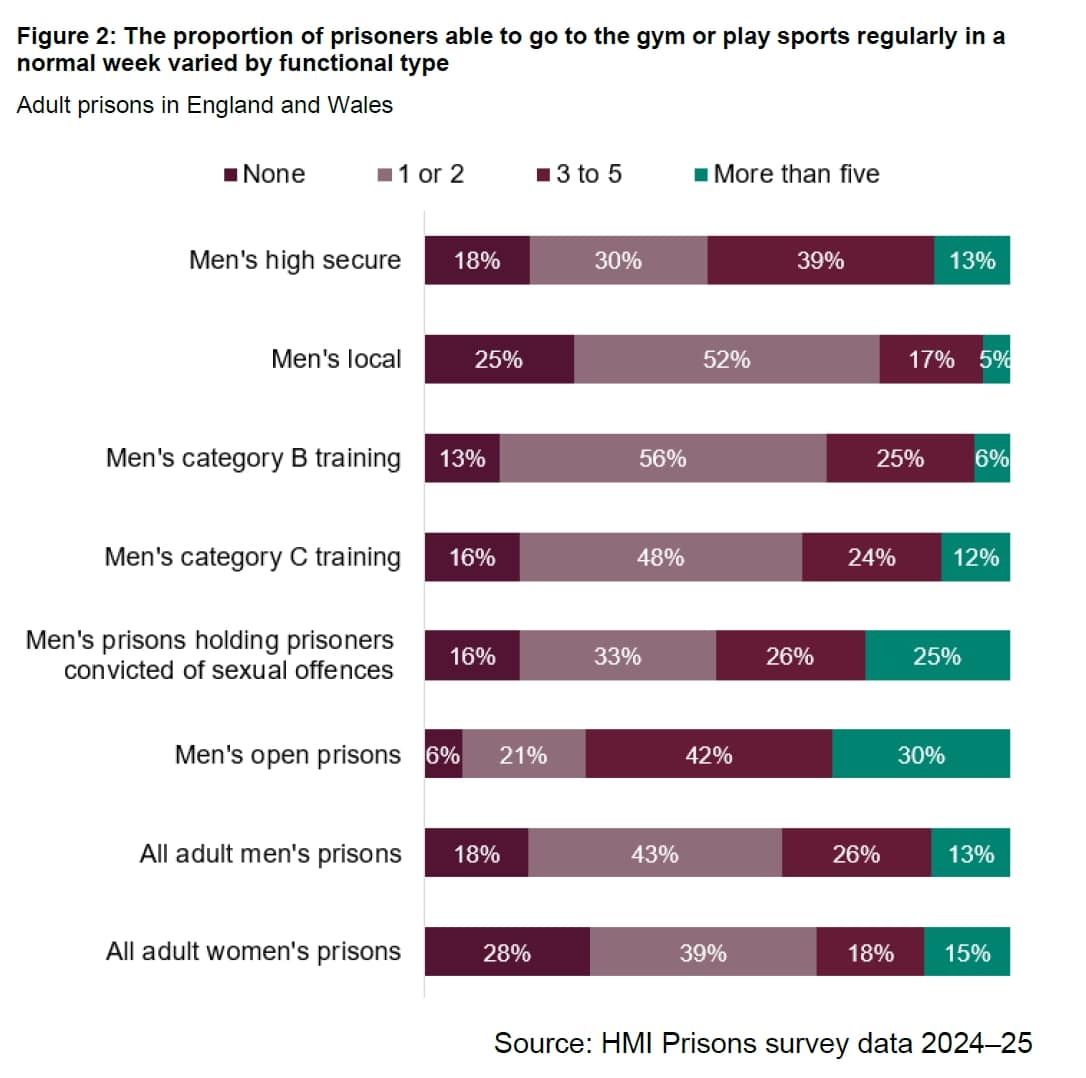
Drawing on survey and inspection findings from a year of inspections, ‘Hardly working out: barriers to physical education in prisons’ found that 18% of men could not use the gym or play sport in their jail, rising to 25% in men’s local prisons. At 28%, the proportion was even higher in women’s jails. Weekend access was particularly poor, with fewer than half of all prisoners able to take part in exercise activities.
The report “Hardly working out: barriers to physical education in prisons” says that visiting the gym and physical exercise are enormously important to many prisoners. Time spent in the gym takes them away from the drudgery of life on the wings, supports their well-being and improves their physical and mental health.
As well as describing the barriers to regular gym access, this report shares examples of effective provision. Many jails have worked hard to increase access and encourage a wider range of prisoners to visit the gym by establishing varied and imaginative programmes. Too few prisoners, however, remain unable to benefit from them.
Only 13% of the prisoners inspectors surveyed in men’s prisons, and 15% in women’s prisons, said that they could go to the gym or play sports more than five times a week. This figure was highest in open prisons (30%), and lowest in local prisons (just 5%). Some of the prisoners said that they could not go to the gym or play sports at all in a normal week; this was highest in men’s local prisons (25%) and women’s prisons (28%).
The chart I have reproduced below shows the proportion of prisoners able to go to the gym or play sports regularly in a normal week dependent on the type of establishment they were in.
Reduced availability on weekends
Inspectors found that access to the gym was substantially reduced on the weekend, despite the fact that there were almost no other activities on. The survey findings revealed that in men’s prisons only 58% of prisoners reported that they could go to the gym and play sports at the weekend. In women’s prisons the figure was 52%.
In many of the establishments inspectors visited, there were too few weekend sessions and in one prison, sports facilities were closed altogether on Saturdays and Sundays.
Despite this, inspections found some positive examples of weekend provision, such as at Hatfield where team games were organised during weekends and weekday evenings. There, 95% of survey respondents said they could go to the gym or play sport at the weekend.
The report reveals the bizarre fact that Five Wells, a prison which only opened in 2022, had been built with no dedicated gym and had been forced to convert a workshop for this purpose.
Good practice
Despite the challenges, numerous jails were offering excellent, targeted provision, and making the best use of their resources and space. Gym staff at Oakwood had worked with the health team to provide sessions for men with a history of substance misuse, Frankland had made links with the education department to run fitness classes which supported maths and English, the PE team at Chelmsford delivered courses with younger prisoners to help reduce violence, and Humber was using military-style obstacle courses to foster better relationships between prisoners and staff. A number of jails had developed good connections with sports clubs and schemes in the community, many of which led to qualifications or helped to provide resettlement support.
Conclusion
Chief Inspector Charlie Taylor summarised the report’s findings by saying:
“Many jails have worked hard to increase access and encourage a wider range of prisoners to visit the gym by establishing varied and imaginative programmes. Too few prisoners, however, remain unable to benefit from them.
“I hope prisons will learn from what the best are doing and that the prison service will make use of the evidence we provide in this report to improve provision.”
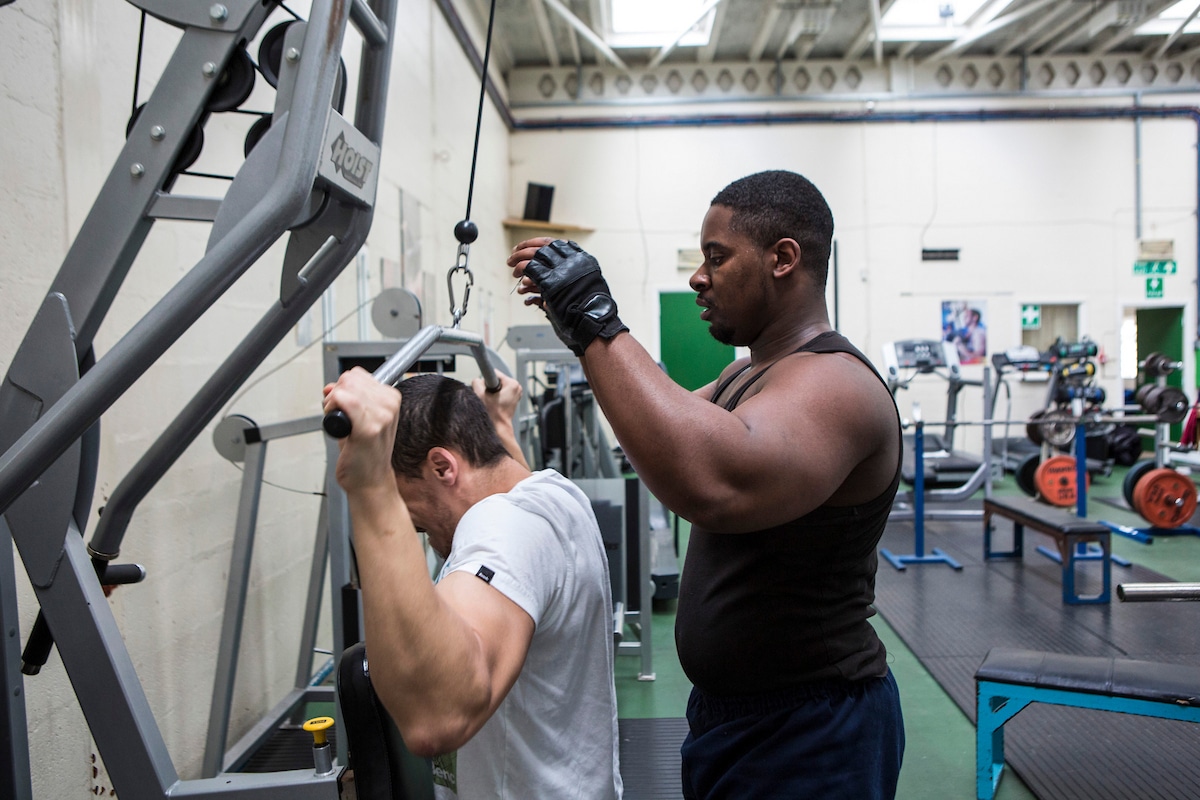
Thanks to Andy Aitchison for kind permission to use the header image in this post. You can see Andy’s work here.