The latest (19 June 2026) Academic Insight in HMI Probation’s extensive series features Dr Sean Brophy writing on Contemporary leadership evidence for probation and youth justice services. The report highlights why leadership quality matters both instrumentally and ethically for UK public services before summarised the key developments in the academic research on this topic.
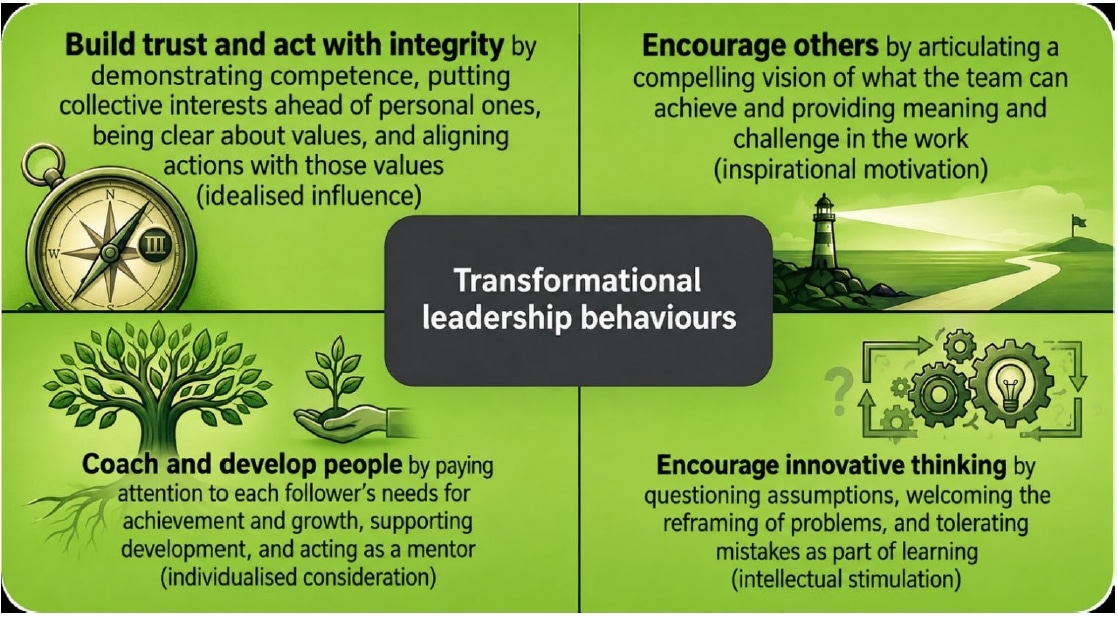
Dr Brophy goes on to show how the evidence base for investing in leadership has never been stronger – supporting staff engagement, satisfaction, performance, and retention – and how it promotes a focus upon the transformational leadership behaviours of building trust and acting with integrity, encouraging others, encouraging innovative thinking, and coaching and developing people.
Leadership particularly important for probation & youth justice
Dr Brophy highlights the fact that how probation and youth justice perform depends less on capital or technology and more on the quality of the interactions between staff and the people they supervise. He makes the point that leadership – how managers and senior leaders orient, motivate, support and develop their teams – shapes everything about those interactions: from whether practitioners stay in post long enough to build expertise, to whether they feel safe to reflect openly on mistakes, and to whether they experience their work as meaningful rather than as a checklist to be completed.
Anyone working in probation in particularly will be aware of both these issues as chronic problems areas.
The full range leadership model
Dr Brophy explains the Full Range Leadership Model which identifies four behaviours, known in the literature as the ‘Four I’s’ and summarised in the infographic I have reproduced below. These ‘Four I’s’distinguish transformational leaders.
Transactional supervision
Dr Brophy’s picture of the management style experienced by many probation staff will ring a bell with many:
“Supervision by senior probation officers, the first-line management relationship that matters most for practitioners’ day-to-day experience, is variable. Some practitioners describe excellent, individualised coaching, but many report supervision focused primarily on compliance and case allocation, what the Full Range Leadership Model would describe as transactional supervision. The thematic evidence also suggests that under sustained caseload pressure this pattern can drift further: staff describe managers who are less visible, who intervene only when problems have become acute, and whose engagement is confined to immediate operational direction. That kind of reactive, firefighting supervision is consistently associated with worse outcomes for performance and retention.”
Dr Brophy says that this does not mean that transactional, operational management should be abandoned; it is how public services are run. However, it does mean that transactional management alone is insufficient.
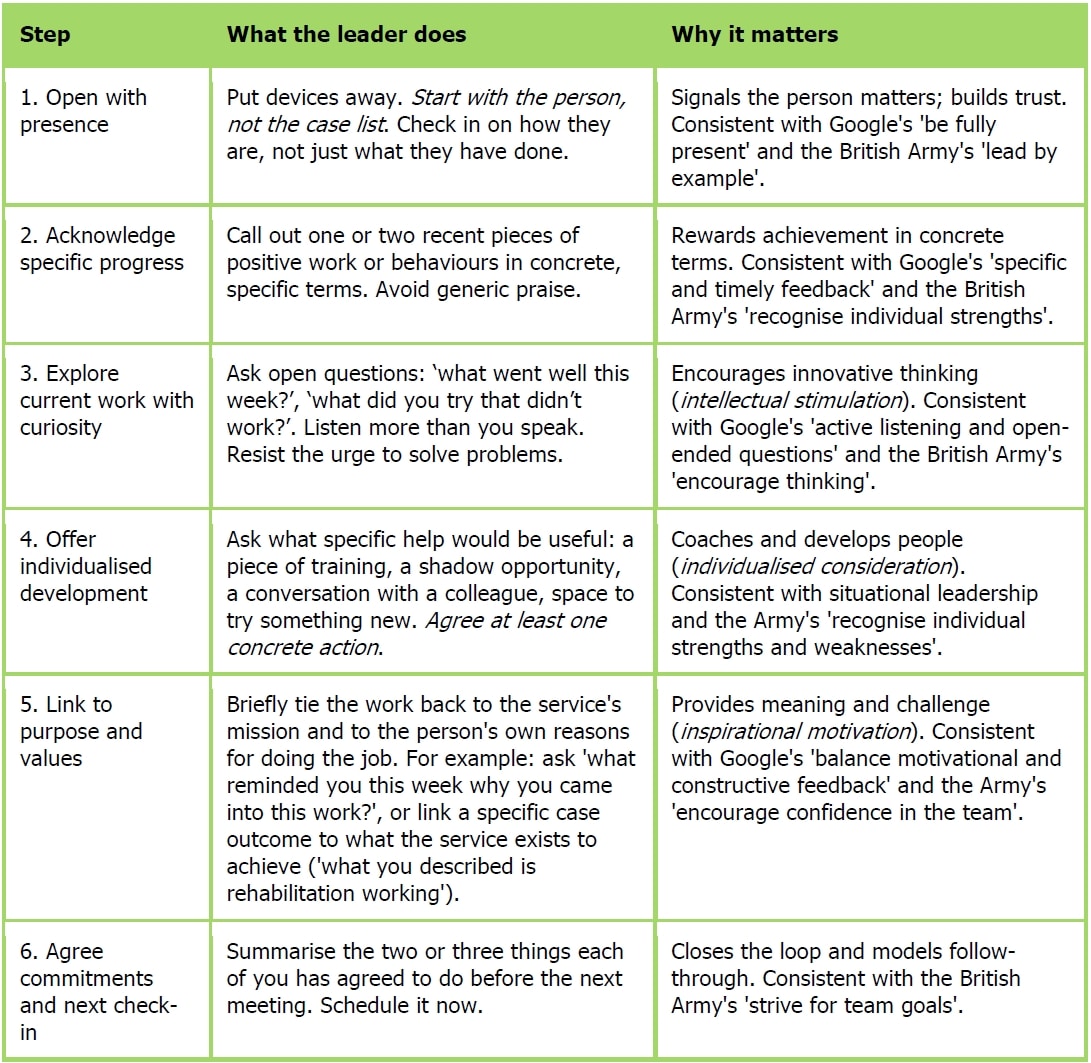
The strength of this report, for me, is that it is does not merely walk us through the literature and then dissect the problems of the modern probation service with both frontline practitioners and managers working under sever pressure, but presents a really helpful, usable six point structure of a transformational supervision conversation, set out in the table below.
Conclusion
Dr Brophy concludes the review by urging investment in leadership at all levels of the probation and youth justice services “as a first-order investment rather than a discretionary extra, and should measure it so that leadership quality is visible alongside operational metrics“.
Front line managers in both probation (SPOs) and youth justice (team managers) are key:
“the evidence suggests that even modest investments in their capability (coaching-style supervision training, peer support, protected time) return substantial benefits.”