Human Learning Systems
The latest (15 May 2026) in the probation inspectorate’s Academic Insight series is entitled: Human Learning Systems and Probation Services: Making desistance real. Written by Toby Lowe, Kevin Wong and Chris Fox (all from Manchester Metropolitan University), the authors make the case for Human Learning Systems (HLS), which, they argue, enables services to respond to the complexity of people’s lives and the contexts they operate within.
The authors make the case that the probation service exemplifies the complex conditions recognised by HLS, encompassing compositional, dynamic, experiential, and governance complexity. Furthermore, the application of desistance theory in probation practice supports approaches which are personalised and relational, aligning with the HLS emphasis on bespoke public service provision, built on human relationships that are flexible, responsive, and grounded in care.
The authors show that, to implement the HLS principles, attention needs to be given to facilitating supportive and bespoke co-produced approaches, creating continual learning environments, and maximising collaboration and sharing between local and national stakeholders.
HLS a better fit than NPM
The authors start by arguing that the current model of organising public services, the New Public Management approach which has been dominant since the 1990s, puts too much emphasis on performance targets and outcome measures to the detriment of what many believe (including me) to be the core tenets of probation work: professional judgement, relational work, and longer-term rehabilitative goals.
HLS is an alternative approach to public management which has been developed by public management practitioners and academics over recent years:
- Human: the moral purpose of public service is to support human freedom and flourishing
- Learning: the management strategy is to enable public servants, and those they serve to continuously experiment and learn together
- Systems: the unit of analysis for public service are the systems which create outcomes in people’s lies.
The authors then apply these three key beliefs of HLS to probation work.
Human
Translating desistance theory into probation practice requires a personalised, relational approach, which, the authors argue, marries perfectly with the HLS emphasis on bespoke public service provision, built on strong human relationships. This approach highlights approaches already known to many practitioners including a strengths- (rather than deficits-) based approach and the co-production of desistance plans. The challenge here is to ensure that risk management is fully incorporated into the model, while no longer allowing it to dominate all probation practice.
Learning
The “learning” part of HLS entails a change from seeking to control worker behaviour, to creating the conditions in which workers and those they are working with can experiment and learn effectively together. A return to reflective practice and the introduction of a more trauma-informed approach with practitioners supported by clinical supervision are both key here.
Systems
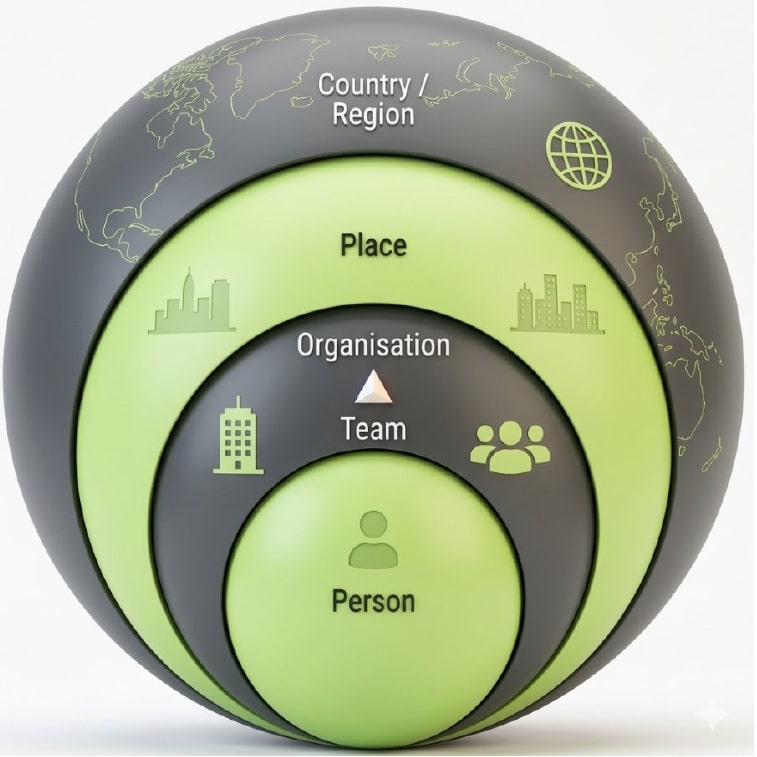
The final component “systems” is probably the most challenging for the probation service and HMPPS to enact. HLS expects systems thinking to be enacted across multiple system scales:
- the teams that support the person
- the organisations which are made up of teams
- the places that are made up of organisations
- the countries that are made up of places.
Conclusions
The authors’; concluding argument is that the negative effects of NPM, including its failure to account for complex lives and conditions, suggests that probation would benefit from exploring alternative public management approaches which enable it to respond more effectively to the desistance outcomes it seeks. HLS, with its emphasis on bespoke, personalised public service, enabled by Learning as a Management Strategy applied at all system scales, seems to provide an excellent context in which to make desistance theory a reality in the probation service. Experiments in recent years with approaches that involve co-creation and are more strengths-based have shown some promise, although the evidence base is still limited.
While the authors argue that HLS has the potential to accelerate the adoption of approaches that are relational, strengths-based and that operationalise important aspects of desistance theory, their acknowledgement that its implementation would need skilled collaboration between local and national actors to experiment with personalised, strengths-based practice in probation work, supported by team and senior leaders trained in pattern spotting and creating effective learning environments, makes the project seem extremely ambitious. Not least because there would be serious resources needed in equipping probation staff at all levels with the training and support required to deliver this more holistic and person-centred approach to desistance.