The interplay between masculinity and mental health
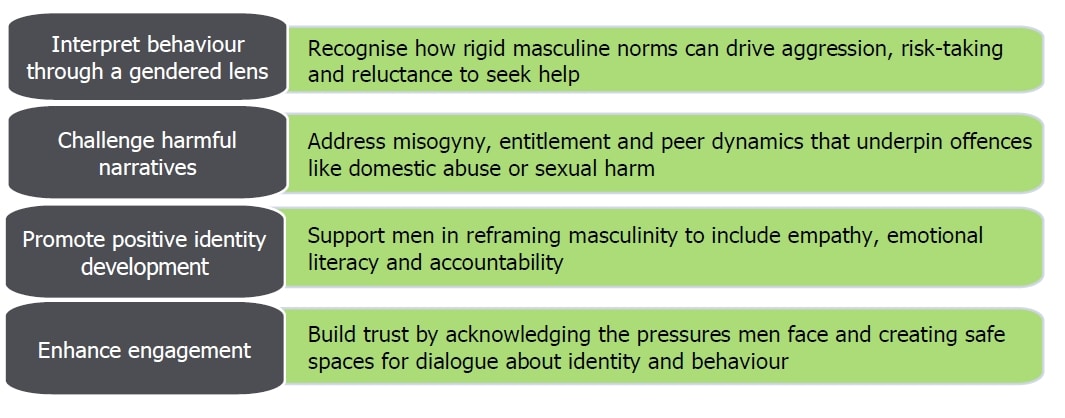
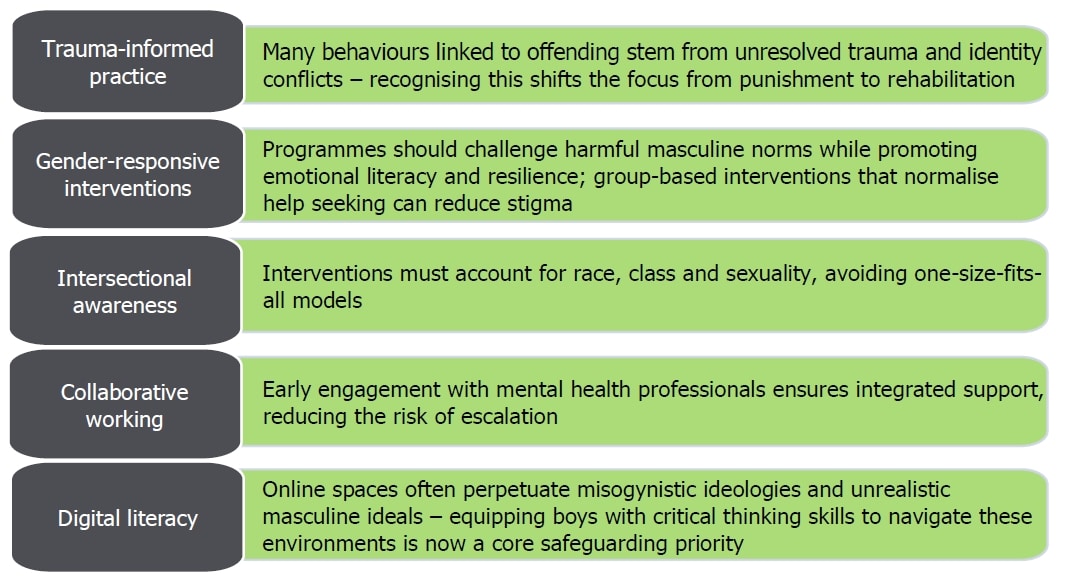
Dr King-Hill argues persuasively that probation and youth justice practitioners need to understand the interplay between masculinity and mental health. She says that traditional punitive models risk exacerbating shame and reinforcing harmful norms. The author advocates a strengths-based and gender-informed approach and spells this out via another helpful infographic:
 Dr King-Hill treats the subject of the exclusion of young men and boys from the conversation about violence against women and girls sensitively. She argues that simply blaming young men reinforces negative narratives and makes the situation worse by fostering shame, resentment and defensiveness. She says that including young men in the conversation does not diminish the importance of recognising and addressing VAWG, but can help in tackling it:
“Creating safe spaces for young men and boys to explore identity, challenge harmful norms and develop empathy is essential for reducing violence and promoting equality. This involves reframing masculinity as a positive, inclusive concept and recognising that boys and young men have a stake in building safer communities.”
She also highlights the fact that many boys are also the victims of violence.
Conclusion
Dr King-Hill concludes by saying that addressing masculinity within probation and youth justice practice is not optional; but essential. She argues that by embedding gender-informed, culturally competent and trauma-sensitive approaches, criminal justice professionals can disrupt cycles of harm and support young men and boys in building identities rooted in empathy, respect and accountability. She argues that this approach is for the benefit of young boys and men and the women and girls who are so often the victims of the violence encouraged by masculinity conceived as the dominance and physical and psychological control of women.
Thanks to Alexander Londoño for kind permission to use the header image in this post which was previously published on Unsplash.