
On Probation
10 things I learnt from MoJ strategic plan
MoJ commits itself to prison reform: “We will change the way we run prisons so there is an unremitting emphasis on rehabilitation and redemption.”

MoJ commits itself to prison reform: “We will change the way we run prisons so there is an unremitting emphasis on rehabilitation and redemption.”

In times of austerity it becomes more important than ever to acknowledge that safe and decent prisons only come about by listening to staff and inmates. I would seek to dismantle the present MoJ command and control structure and return to a position where Governors have authority to innovate and find local solutions that can improve each regime as they see fit.

Perhaps the most concrete of the commitments in this document is the plan to consult on a new compensation system which would mean that victims received compensation on conviction, rather than having to wait for months and years “as and when the offender is able to pay.”

Last week the MoJ published the latest local adult re-offending rates for the year ending on 30 June 2013. These figures will be scrutinised more closely than ever given the upcoming privatisation of the probation service via the government’s Transforming Rehabilitation project.

Last week the MoJ published modelled data for the 6 years from 2005 to 2010, showing the number of offenders in each PbR cohort and the 1-year re-offending rates among those offenders. The report provides an historical picture of probation performance in reducing reoffending aimed at those organisations interested in winning the new probation contracts. It presents performance on a Contract Package Area, rather than Probation Trust, basis and it looks specifically at the group of offenders for whom the new Community Rehabilitation Companies will be responsible.

The purpose of the Justice Data Lab was to make it possible for small voluntary organisations to find out if their work with offenders made a difference to reoffending rates. It was launched as part of the Transforming Rehabilitation project as a way of government, commissioners and Prime providers having a way of comparing the impact of different providers delivering a range of interventions. Despite the strong publicity surrounding the launch of the Data Lab,

When the MoJ lit the fuse on the Transforming Rehabilitation procurement process last week, it also published a “Principles of Competition” document. The document is divided into two parts: Competition Fairness and Market Management…
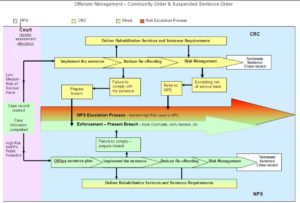
When the MoJ launched the competition for the outsourced components of the probation service on 19 September 2013, they issued a number of accompanying documents. Perhaps the most important was the Target Operating Model (TOM) which explains how the new system, with the current probation trusts split into a National Probation Service (NPS) and 21 Community Rehabilitation Companies, will operate in practice. TOM is 64 pages long and gives a very detailed description of the current MoJ vision of how reducing reoffending will work from 2015 onwards…

TR competition process updated again September 2014

What works? One of the positive side-effects of the Transforming Rehabilitation project (launched in earnest yesterday) has been the debate it has provoked about what

TR provokes strong feelings with some seeing it as an opportunity to improve the quality and effectiveness of work done to reduce reoffending and others maintaining that it is mainly about privatisation and will result in a poorer service. This fundamental difference of opinion has led to a somewhat stagnant debate in recent months. So, I decided to try to liven up the debate, and widen its scope by engaging some new participants…
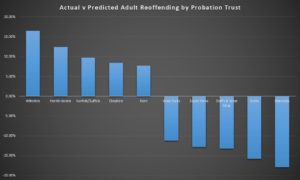
The latest MoJ reoffending rates show that probation trusts continue to reduce reoffending even under the pressure of the proposed wholescale changes under the government’s Transforming Rehabilitation agenda. This overall good progress does, however, conceal a considerable variation between trusts.