Yesterday (31 May 2018), Prison Chief Inspector Peter Clarke published his second “urgent notification” requiring Justice Secretary David Gauke to explain how conditions at HMP Exeter will be improved as a matter of urgency, following an unannounced inspection between 14 and 28 May which found disturbingly high levels of violence and self-harm and a serious failure to tackle safety issues.
Mr Gauke has 28 days to respond publicly, explaining how outcomes for prisoners in the institution will be
improved in both the immediate and longer term.
For a full explanation of the urgent notification process, see here.

Serious safety concerns
The Chief inspector sets out his reasons for invoking the urgent notification protocol at some length:
Since the last full inspection in August 2016, safety in the prison has significantly worsened in many respects, and has attracted our lowest possible grading of ‘poor’. There have been six self inflicted deaths, five of which were in 2017. Despite some creditable efforts to implement recommendations from the Prisons and Probation Ombudsman following those deaths, the overall level of safety at HMP Exeter is unequivocally poor.
Self harm during the past six months is running at a higher rate than in any similar prisons. It has risen by 40% since the last inspection. Assaults against both prisoners and staff are among the highest we have seen, and the use of force by staff is inadequately governed. Meanwhile, illicit drugs are rife in the prison, nearly a quarter of prisoners are testing positive, and all this is taking place in a prison where the living conditions for too many are unacceptably poor. During the inspection we saw many examples of a lack of care for vulnerable prisoners which, given the recent tragic events in the prison, were symptomatic of a lack of empathy and understanding of the factors that contribute to suicide and self harm.
Mr Clarke goes on to detail that even though Exeter had received a very critical inspection report in August 2016, little or no progress had been made:
We made 14 recommendations in respect of safety, including two main recommendations. One was intended to address the fact that too many prisoners felt unsafe, and the other focused on the poor governance of the use of force. During this latest inspection we found that neither of these main recommendations had been achieved, and in fact the situation in both respects had deteriorated. Overall only three out of the 14 safety related recommendations had been fully achieved.
The Chief Inspector highlighted concerns about vulnerable prisoners, which were not attributable to under-staffing:
In the context of a prison with significant levels of vulnerability among prisoners, and where suicide and self harm are at such high levels, it was shocking to see the way in which cell call bells were routinely ignored by staff. Given that the prison is now much better staffed, this was inexcusable. Inspectors saw bells going unanswered even when staff were doing nothing else. Even on the first night and induction landings, where
prisoners are likely to be at their most vulnerable, bells were left unanswered for long periods. The prison’s own recording system showed that it was commonplace for bells not to be answered within a reasonable time. The system was either not being reviewed by managers, or what it revealed was being ignored.
Other concerns raised included:
- Many cells in a poor state of repair.
- Very high availability of illegal drugs.
- 60% prisoners said they had been bullied or victimised by other prisoners.
- 48% prisoners said they had been bullied or victimised by staff.
Conclusion
Until yesterday, the MoJ had been having a good week with praise for its new education and employment strategy and plaudits for the Justice Secretary’s courage in saying he wanted to cut the prison population. The state of Exeter prison shows that there is still a long way to go before much of the prison estate can provide even a basic safe place of residence.
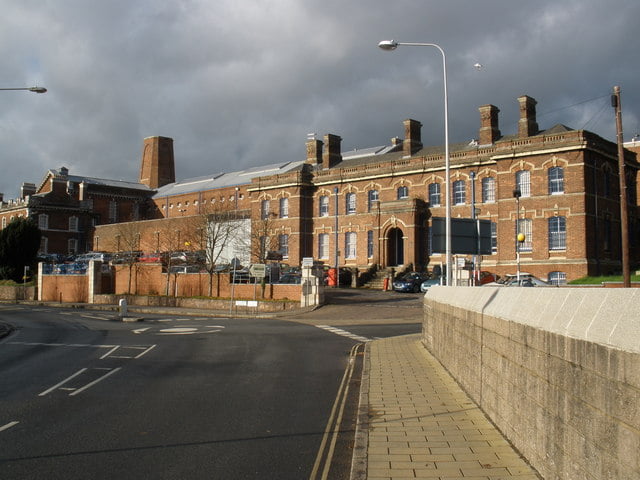
Photograph of HMP Exeter By Roger Cornfoot, CC BY-SA 2.0, https://commons.wikimedia.org/w/index.php?curid=13768851