Children on custodial remand
A recent (11 November 2025) report by the Children’s Commissioner, Dame Rachel de Souza, argues that custodial remand for children is used much too often. The report “A production line of pointlessness”: Children on custodial remand points out that last year, 441 children who were locked up in custody awaiting their hearing did not end up receiving a custodial sentence. Another 168 children had their case dismissed altogether.
Dame de Souza highlights the traumatic and lasting impact of putting a child in prison:
” We should be clear, however, that custody is the most extreme intervention the state can make in a child’s life and it may be necessary in a very small number of serious cases. But it is not, and must never become, a waiting room for children whose real need is care, housing or mental health support. Or as one secure setting staff member aptly described, “a production line of pointlessness.
When a child is placed on custodial remand, it must be because there is no other safe and viable alternative.”
Trends
This report aims to develop a fuller understanding of the experience of being a child on custodial remand. It brings together data on looked after children and children’s voices, to ensure children’s experiences are central to any future reform. The report provides detailed information on how many children are remanded and the changing nature of remand placements:
- There has been a decrease in the number of children being remanded into custody. In 2023-24, 71% of all remand episodes were to custody, compared to a peak of 94% in 2015-16.
- At the same time as the use of custodial remand has decreased, the nature of remand placements has changed:
- There was a decline in the use of foster care placements from 13% in 2013-14 to 5% in 2021-22. This may be due a falling availability of foster care placements or increasingly complex needs of children requiring more specialist foster care placements that are more limited in availability. Ofsted data shows that the number of households in England who offer a remand placement has dropped by more than half in recent years. In 2019 there were 210 placements offered and by 2023 this had fallen to 80. If placements remained at 210, this would cover almost 29% of the total remand population in 2021-22.
- More positively, there has been an increase in the proportion of children placed with their parents or others with parental responsibility. This may reflect efforts to maintain continuity for children and keep children within family environments where it is suitable.
- Remand placements to residential or semi-independent living arrangements outside children’s home regulations rose sharply between 2013-14 and 2021-22. In 2021-22, around one in ten children was remanded to residential or semi-independent living compared to 2.5% in 2013-14.
- The use of custodial remand varied substantially between local authorities. Between 2013-14 and 2021-22, one local authority used custodial remand for 100% of all remand episodes, while another local authority used it for 38%. Many local authorities (38%) used custodial remand for three-quarters or more of their remand episodes.
- Despite falling numbers of remand over the last ten years, children can spend long periods of time on remand, with the average duration of custodial remand rising over time. In 2021-22, the average custodial remand lasted 125 nights, over four months, representing an 89% increase since 2013-14.
- In 2021-22, 14% of children on custodial remand were there for more than 182 days. This is over the custody time limit of 56 days in the magistrates court and the upper limit of 182 days in the crown court.
- There are evident ethnic disparities across the justice system and remand is no exception. In 2021- 22, 56% of children remanded were from an Asian, black, mixed or other ethnic group and the remaining 44% were from a white ethnic background. Black and mixed ethnicity children were over-represented in the population of children on custodial remand.
- Multiple remand episodes are not uncommon and of all the children remanded into custody in 2021-22, 24% had previously been remanded into custody.
- Short-term custodial remands remain an issue, 11% of custodial remand episodes were for 14 nights or less and 8% of remands for 7 nights or less. Professionals told the office that delays in creating bail packages or sourcing suitable local authority accommodation resulted in periods of custodial remand for 7 days or less. This aligns with the findings of HMIP’s Review of Custodial Remand for Children in 2022.

Children’s views
Children most frequently spoke about feelings of uncertainty and anxiety around their court hearings and the potential length of time they may spend in custody. While many said that professionals made genuine efforts to explain the youth justice process, children often still struggled to understand. This was largely due to feeling overwhelmed at the time and because the terminology and language was still not sufficiently adapted to their level of understanding.
Staff views
Staff describe children on remand missing out on life events – one child remanded into custody missed the birth of his child and another was unable to attend his father’s funeral.
Recommendations
The Children’s Commissioner continues to advocate for an ambitious national reform that re-designs the secure care system to prioritise treating children who offend, first and foremost, as children who are in need of specialised support. She makes two key recommendations:
- The Department for Education (DfE) should be responsible for the delivery of all core services for children and there should no longer be continued attempts to reform an unsatisfactory youth justice estate that fails to meet these children’s complex needs.
- A new youth justice system must be based primarily upon a rehabilitative model of care developed by DfE and NHS England, with an improved education and engagement offer. It must be delivered in smaller, homely settings close to where children live, or Secure Children’s Homes and there should be a clear, time-bound plan to phase out all Young Offender Institutions (YOI) and Secure Training Centres (STC).
Importantly, the Commissioner argues, this should be part of a broader reform towards commissioning all high needs accommodation placements on a regional basis. At present, the quality and availability of placements varies significantly between local authorities, resulting in pockets of good practice rather than a consistent national offer. A regional commissioning model would ensure that children have equitable access to suitable, high-quality placements designed to meet their specific needs, regardless of where they live.
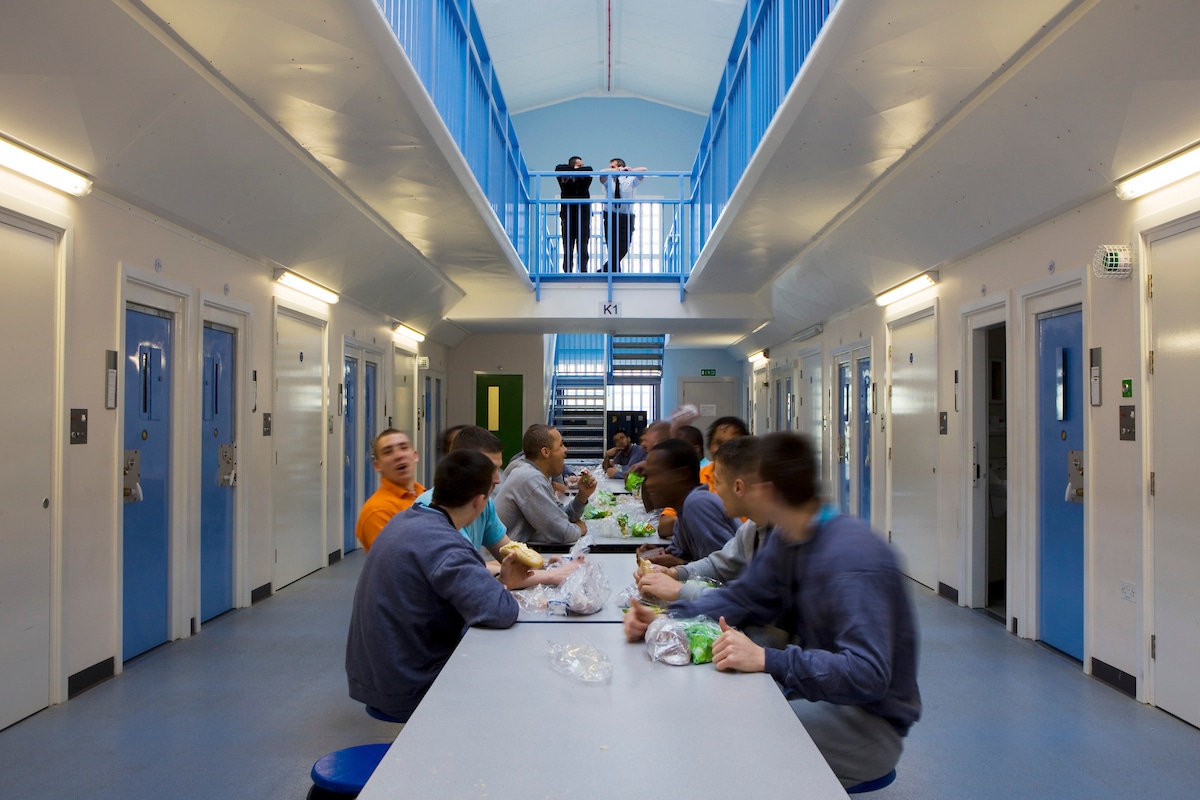
Thanks to Andy Aitchison for kind permission to use the header image in this post. You can see Andy’s work here