Prison and probation annual report
National Offender Management Service has published its annual report and accounts for 2014/15. What does it tell us?

National Offender Management Service has published its annual report and accounts for 2014/15. What does it tell us?

The Prison Reform Trust’s Bromley Briefings are the best source of up-to-date, accurate information on everything that’s going on in our prisons. If you want to know who is being imprisoned, for doing what, in what sort of conditions…

The number of prison suicides and incidents of self-harm has risen sharply recently. Despite the best intentions of the Ombudsman, I fear it is reasonable to expect the figures to get worse and for more human lives to be needlessly lost as the Ministry of Justice embarks on another round of cuts.

Christoper McDonald, a former IPP prisoner , provided the audience with insight into the reality of life on the inside, far away from the court room. ‘For about two years I stayed in a cell that was no longer than my arm span, with two to three other people in a cell,’ he explained. ‘Later on in my sentence I was represented by Lubia [Begum-Rob, joint managing solicitor at PAS], who told me I do have rights, and we could start to challenge some of the decisions. More needs to be done to inform prisoners of what they are entitled to,’ he said.

The prison takes away many choices and coaching give some fundamental ones back, along with hope. Not the blind hope that the whole world will miraculously change, but that they can change themselves and parts of the world around them. Some explicitly choose to become survivors not victims.

Bradley found that mental health and substance misuse services in prisons did not work well together and that this situation did not improve in the five years between his two reports. RAPt’s experience is that only the minority of inmates with acute mental health problems currently receive treatment in prison, with the majority having to cope with their problems in a hostile prison environment without dedicated support.

The PHE report summarises our understanding of smoking in prison. On the one hand, limited access to tobacco can reduce how much and how often prisoners smoke as can the cost of tobacco for those surviving on a prison income.
Conversely, smoking is often seen as a coping strategy to manage the stress of imprisonment and helps to alleviate boredom. Not smoking in a culture where a large majority of people smoke can also be socially isolating. And, of course “Burn” remains one of the principal prison currencies.

At the moment our prisons are a ticking time bomb that could explode into violence without warning. Frontline staff shortages and overcrowding are contributing to this explosive and toxic environment. If I were Secretary of State for Justice my first priority would be to ensure that no prison in England and Wales has less staff than it needs to operate a safe, normal regime.
These are very disappointing results for the MoJ. Normally, there would be an expectation of a high level of performance from pilots with such public exposure where the partners had chosen to participate and, indeed, had championed and driven the initiative from the outset. Therefore, it is an extremely worrying sign for the new private providers of probation whose revenue will be, to an increasing extent, dependent on reducing reoffending rates, that these high-profile pilots are performing so poorly.

If we all want people to leave prison and make a positive contribution to society, why not enable them to start during their sentence? I would make it a priority to ensure prison staff work together with prisoners to improve rehabilitation by giving them more responsibility, using their talents and encouraging them to help others with roles such as peer mentors, student council representatives and learning champions.
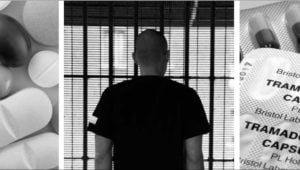
Although it is obvious that the main reason that such large quantities of drugs get into prison is to feed the demand of the many dependent drug users inside, it has long been a significant concern that as many as one in five heroin users took the drug for the first time in custody.

The Committee highlights under-resourcing again and says that unless staffing shortages are addressed and the backlog of risk assessments cleared, the new probation providers will be hampered “considerably” in their efforts to provide a better through-the-gate service and reduce reoffending.