How good are we at solving crime?
In almost half (49%) of all offences recorded in 2014/15, the suspect was not identified and the case was closed.
Here you can find over 200 posts tracking every major development in policing since 2011. You can trace the impact of staffing cuts, follow the debate about the role of modern policing and keep up with the latest in digitisation, use of drones & other innovations. If you’re looking for something in particular, try the search box below.

In almost half (49%) of all offences recorded in 2014/15, the suspect was not identified and the case was closed.

Latest official police workforce stats. Given our current fixation on reducing the budget deficit, it’s hard to imagine that next year’s workforce figures will show anything other than a further decrease.

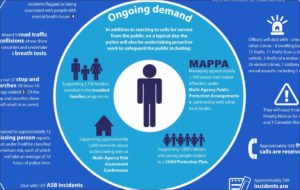
Chief Constable Alex Marshall (the chief exec of the College of Policing) argues that the changing mix of crime means that over the past 10 years, investigating and preventing crime is become more complex with crime such as child abuse and domestic violence taking up much more police time.

Police use of tasers We can be rightly proud of the very low number of police shootings in England compared to most other countries. In

The invaluable Statista website recently published the damning infographic below showing that, allowing for the difference in population, you are 100 times more likely to be shot dead by a police officer in the US than the UK.

Following the recent depressing inspection report that found British criminal justice agencies are doing very little to tackle disability hate crime, I thought it might be interesting to look more generally at the prevalence of hate crime within the European Union. As you can see, even with the acknowledged under-reporting of hate crimes, the figures are extremely worrying.

A victim’s guide to restorative justice is a new film for victims of crime explaining the different points in the criminal justice system where they can access restorative justice. It also tells them who they can contact if they want to make use of this approach.

£2.3 billion was cut from police budgets in the five years since 2010/11 – a cut of between 12% and 23% for individual police forces. These figures are from the recent (4 June 2015) National Audit Office report: “Financial sustainability of police forces in England and Wales”. NAO reports are invaluable, in my opinion, because the organisation has no political axe to grind and merely examines costs and performance as fairly as possible.
The ONS report makes it clear that the number of drug offences recorded by the police is heavily dependent on police activities and priorities. Changes in the number of offences are more likely to reflect changes in the policing of drug crime, rather than real changes in the number of drug offences.

New technologies present new opportunities for law enforcement agencies to catch and prosecute criminals – from Smartphones that can report themselves stolen to the increasingly sophisticated police use of social media for gathering intelligence, investigating crimes and establishing evidence. The Air and Space Evidence Agency uses satellite imagery to assist criminal investigations.

There were six outcomes in the detections framework prior to April 2013, nine from April 2013 to March 2014 and from April 2014 there are a total of 19. This expansion in the number of outcomes follows a public consultation which aimed to make the recording of crime outcomes more transparent and reliable.

As the English and Welsh probation service is currently being privatised via the Government’s Transforming Rehabilitation initiative, here is a quick reminder of just how much the criminal justice system is privatised in other parts of the world.