End of an Era?
At its annual conference last week (23-24 January 2014), the Probation Chiefs Association launched a publication to celebrate its past achievements and to capture key aspects of its 107 years of history before the radical changes of the government’s Transforming Rehabilitation agenda which will see most of the probation service’s work outsourced with new providers delivering services from April 2015.
“Probation – A Celebration of achievement” is free to download  and contains a contribution from every probation trust in addition to the PCA, Probation Association and Association of Retired Chief Officers and Inspectors in Probation.
While some trusts focus very much on current provision, highlighting current practice and achievements, others provide an interesting insight into probation history. It is the latter entries which I found more interesting, with the inevitable twinges of nostalgia.
The brochure also contains an extensive timeline of probation. I have provided a somewhat shortened version below.
A history of probation
1876 First Police Court Missionary.
1887 Probation of First Offenders Act enables court to release offenders on voluntary probation.
1907 Probation Service formally established – 124 men & 19 women are the first POs.
1912 First meeting of National Association of Probation Officers.
1941 Temperance Society separates from probation as service becomes increasingly professional.
1948 Prison aftercare and probation hostels established.
1966 Work in prisons has become integral. Probation areas reduced from 104 to 84.
1972 Community Service (unpaid work/community punishment/community payback) introduced.
2001 54 probation areas reduced to 42 to harmonise with other criminal justice agencies.
2004 Formation of National Offender Management Service.
2010 Probation areas become 35 self-governing trusts.
2011 Probation is first public sector organisation to win British Quality Foundation’s Gold Medal for Excellence.
2013 Justice Secretary Chris Grayling launches Transforming Rehabilitation.
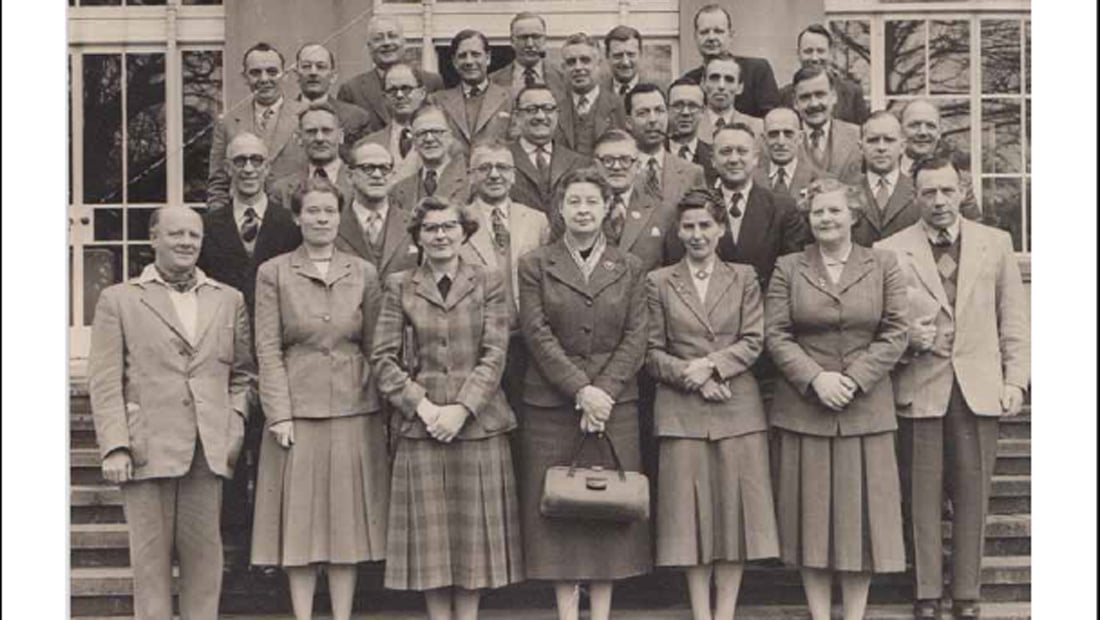
The photograph at the top of this post is of probation chiefs and Home Office inspectors at an old probation conference and comes from Roger Statham (former Chief Probation Officer of Teesside) contribution to the report.