Reading "transformative"
A new report from HM Inspectorate of Prisons published today (13 January 2026) highlights the importance of reading in prison. It reveals how some jails have created vibrant reading cultures that are helping to transform prisoners’ experience and support their rehabilitation.
Inspectors visited nine prisons where governors had focused on reading, and found that leaders were central to an effective strategy, with the best playing a vital role in establishing and sustaining a strong reading culture. They understood that prisoners with low literacy levels were much more likely to struggle in jail and less likely to succeed after prison. Visibly championing reading, they made it a core part of the regime, with well-used, active libraries encouraging participation, and prisoners benefitting from interventions that placed reading at the heart of their rehabilitation.
The report follows reviews in 2022 and 2023 which identified serious deficiencies in the teaching of reading across the prison estate. Depressingly, they found that prisoners with the most need received the least support, education providers were doing little to address low achievement, library opening hours had not recovered since the pandemic and few jails had any sort of prison-wide strategy to promote reading for every prisoner.
However, the 2025 visits revealed that some prisons had made huge strides in addressing these problems and that it was possible, even in the most challenging places, to transform the reading offer for prisoners and promote it as an essential component of rehabilitation.
The report
The report, entitled Reading for Rehabilitation, revealed a variable picture: at some of the jails inspectors found wide-ranging evidence of a vibrant reading culture which was underpinned by clear systems for assessment, teaching, and ensuring progress. Where reading was given a high-profile across the prison, there was a clear and positive cultural shift: staff and prisoners alike valued achievement in reading, celebrated progress, and recognised it as an essential life skill. At others, reading was peripheral to the work of the jail and was not seen as a critical way to help prisoners.
During this thematic review inspectors identified six key elements that contribute to an effective reading strategy. I summarise these briefly below:
1: The role of leaders
Leadership was central to establishing and sustaining an effective reading culture. In the best prisons, governors and senior leaders provided visible, consistent, long-term support, making sure that the library and education providers operated with a shared purpose.
2: A whole-prison reading culture
Inspectors praised prisons that had developed a positive culture in which reading was embedded throughout the regime and championed at all levels. Uniformed staff understood and promoted the importance of reading. Reading opportunities were advertised and accessible across the prison for all levels of ability, and prisoners’ participation was incentivised, rewarded and celebrated.
Governors and senior leaders made sure that teachers, library staff and education providers worked together effectively. Regular, minuted ‘reading meetings’ brought together leaders from all parts of the prison, including safety, workshops, health care, faith, visits, key workers and the offender management unit (OMU), to monitor implementation and hold staff accountable for progress, particularly for the least able readers.
3: Identification, support and monitoring
Strong systems for identifying and supporting those most in need were consistently in place in the most effective prisons. In these jails, the leadership made sure that all prisoners were screened for reading ability, with regular re-screening to monitor progress of those needing help. Clear referral routes were understood by staff at all levels. Interventions were carefully planned and coordinated, and reading progress was tracked through prison-wide meetings. This set an expectation that all staff shared responsibility for improvement.
4: Interventions
In the best establishments there were interventions in place to support those struggling with reading. The Shannon Trust, a charity that supports prisoners to mentor their peers in reading, was operating in many prisons and provided a valued service. In the best sites it formed part of a wider, well-coordinated suite of provision, including structured, phonics-based teaching delivered by trained prison education teachers, and outreach or classroom-based programmes tailored to those unable to read. Where provision was most effective, interventions to support readers were valued and seen as an important route to rehabilitation rather than simply a route into formal education.
Family-based initiatives, such as Raising Readers and Storybook Dads/Mums, were given visibility, status and priority, and valued as part of a rehabilitative culture.
5: The library
Where libraries were open, vibrant and integrated into prison life, they were central to creating a reading culture. Barriers to access were removed: opening hours allowed those in work to attend and a wide range of texts for all levels and tastes of readers were available and publicised.
Programmes of events, including author visits, writing workshops and activities linked to well-being, family and skills, encouraged participation by all levels of readers. Importantly, these events took place regularly and prisoners were enabled by the regime to reliably access them.
6: Visible opportunities for reading in every part of the prison
In prisons with a strong reading culture, opportunities for reading were consistently visible. Resources were actively curated and maintained, and included books, magazines, puzzles, word games and digital resources. Reading was promoted at all available opportunity: in workshops and education classes, on wings, in health, and the gym. Initiatives to provide prisoners with books such as First Night Books or Give a Book, were effective when implemented consistently and monitored for impact.
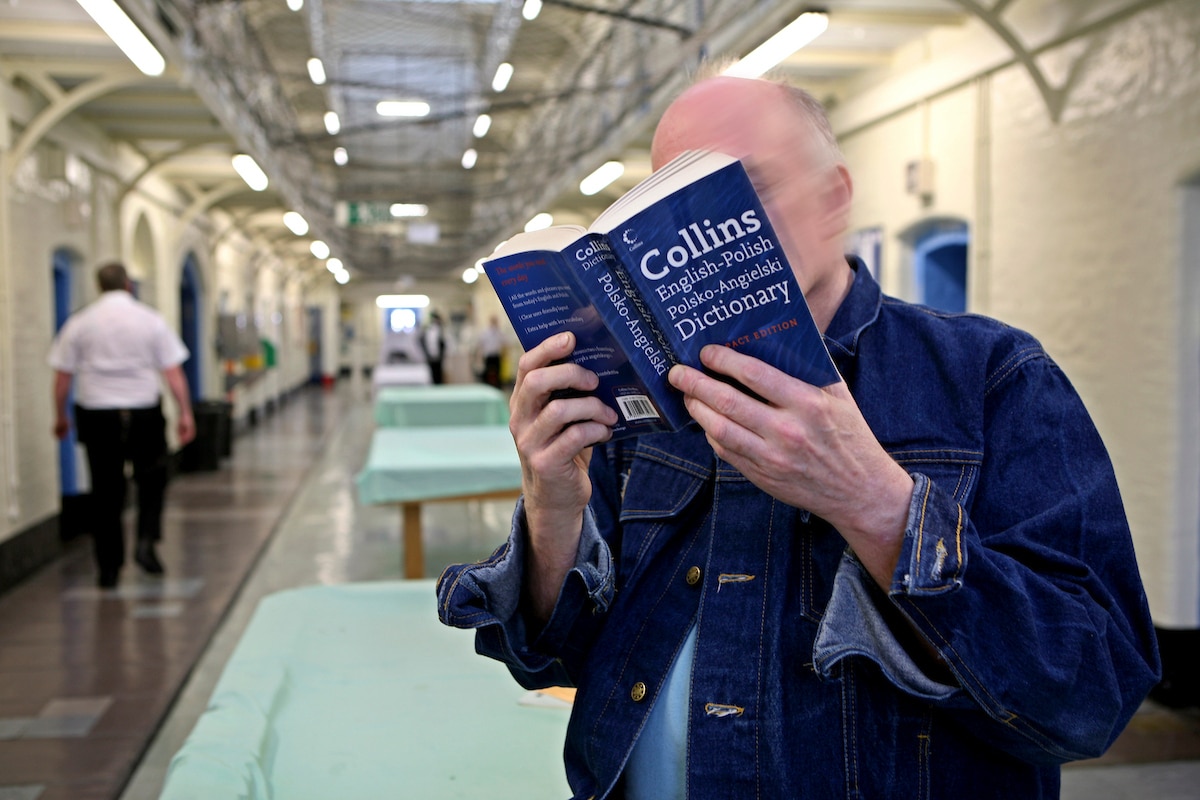
Thanks to Andy Aitchison for kind permission to use the header image in this post. You can see Andy’s work here