The reality of alpha victims
This is a guest post by Amy Loughery, Chris Devany & Laura Bainbridge who share their work on when exploited children exploit others. Chris & Amy are from the Vulnerability and Policing Futures Research Centre at the University of York and Laura is from the University of Leeds.
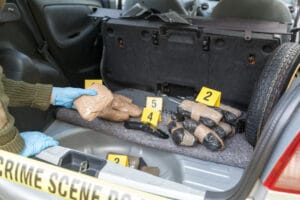
Public and political debates about exploitation often depend on a simple distinction: victims are harmed, offenders cause harm. In practice, the boundary is rarely so neat, particularly within county lines drug markets. County lines refers to the way organised crime groups extend drug distribution from urban centres into smaller towns and rural areas using dedicated mobile phone lines.
These networks depend heavily on the exploitation of children and vulnerable adults. Children are used to transport drugs and money, store weapons, and maintain contact with buyers. Violence, intimidation, and debt bondage are common tools of control. In many cases, the homes of vulnerable adults are taken over – a process known as “cuckooing” – to create bases for dealing.
While county lines is often understood as a policing issue, it is fundamentally a form of child criminal exploitation. And within it, a more complex and uncomfortable reality is becoming increasingly visible.
Children are exploiting other children
County lines operations function via hierarchy. Children may enter at what appear to be low-level roles – carrying drugs, holding money, acting as lookouts. But movement up the chain of command can be rapid. Some children are ‘promoted’ into positions that involve managing logistics, overseeing cuckooed properties, and recruiting and controlling other children.
On the surface, these behaviours can appear deliberate. They can look like clear evidence of offending.
Yet many of these same children have themselves been groomed or coerced into playing these roles. They may be placed into debt bondage, where they are told they owe money for lost drugs or police seizures. Others may be threatened with violence against themselves or their families. In these contexts, taking on a more senior role can be less about ambition and more about survival. They are operating within systems of control that limit their choices and shape their actions.
They have become ‘alpha victims’.
Dual status
The term ‘alpha victim’ is not intended to label or categorise children. Rather, it is a way of drawing attention to a pattern that existing criminal justice and safeguarding frameworks struggle to capture: children who are both experiencing exploitation and enacting harm.
This form of dual status is a corollary of exploitation itself not being a linear process. It is relational, dynamic, and often cyclical. Children can move between roles, or occupy multiple positions at once. Focusing only on what they do, rather than the context in which they are doing it, can lead to partial and sometimes misleading assessments. When a child is seen to be recruiting others or organising activity, their behaviour is often interpreted primarily through the lens of criminality. Safeguarding responses can become secondary, or disappear altogether. However, this risks overlooking the context that produced that behaviour in the first place.
Inequalities
These dynamics are further shaped by wider inequalities. Research on adultification shows that some children – particularly young Black boys – are more likely to be perceived by professionals as older, more responsible, and less vulnerable than they are. This can result in their actions being seen as more intentional and less coerced, reducing the likelihood that their own exploitation is recognised.
The consequence is that some of the most exploited children may be those least likely to be identified as victims.
This is why it is crucial to rethink how exploitation is understood.
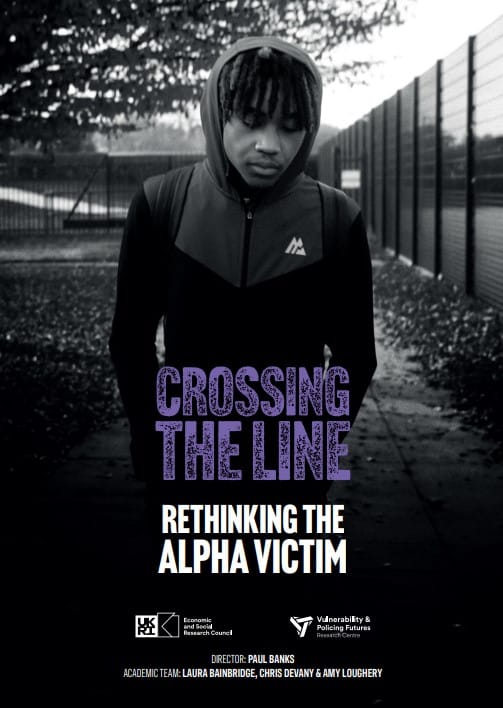
At the Vulnerability and Policing Futures Research Centre, we have been exploring these issues through research and practitioner engagement. As part of this work, we have co-created a short film, Crossing the Line: Rethinking the Alpha Victim, which is accompanied by a podcast episode and practitioner training resources.
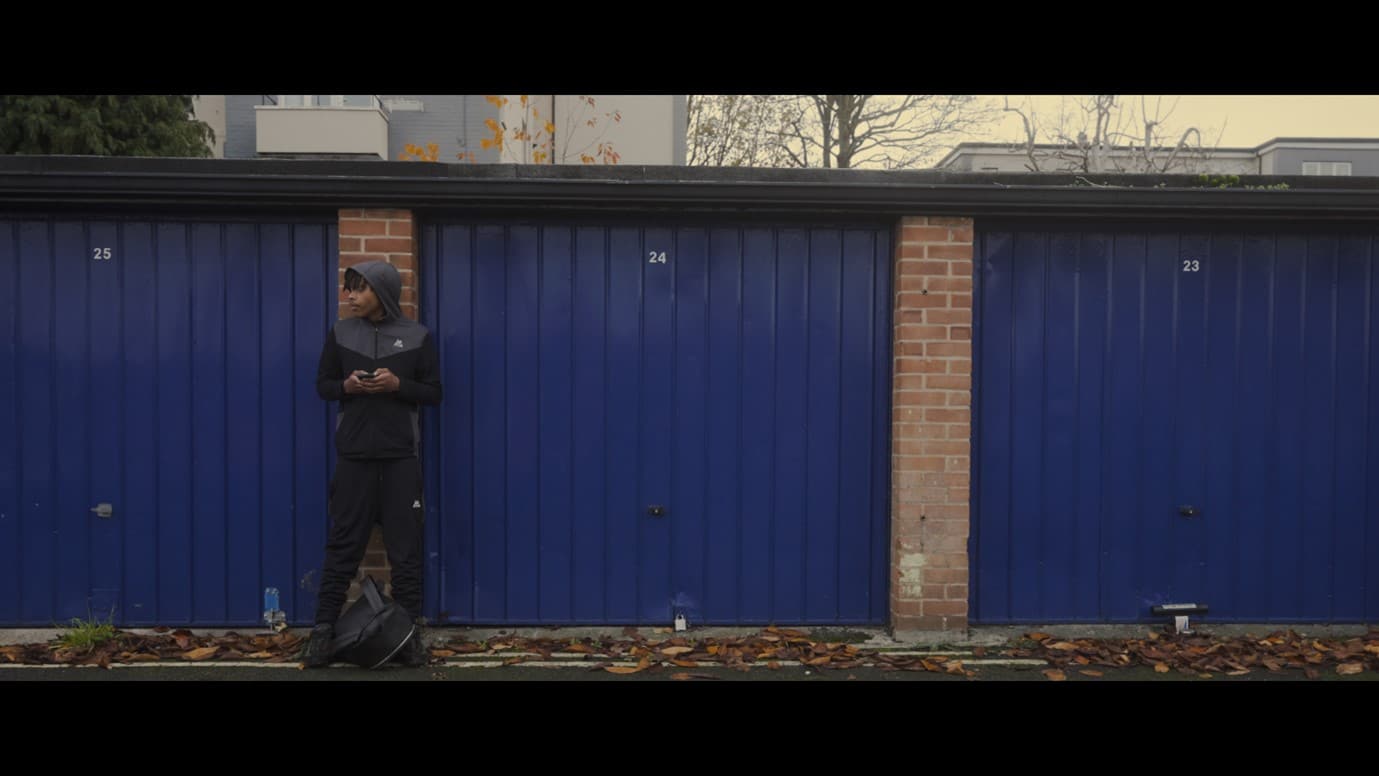
The film follows Alfie Parker, a fictional 15-year-old caught up in county lines. His case is discussed in a multi-agency meeting, where professionals attempt to assess his situation, risk, and vulnerabilities. At the same time, Alfie’s own voice reveals a different perspective – one shaped by fear, and constrained choices.
What emerges is not a straightforward story of victimhood or offending, but something more complex. Alfie is both navigating and reproducing harm, within a system that offers limited exit routes.
A space for reflection
The purpose of this work is not to provide definitive answers. Instead, it is to create space for reflection. If safeguarding responses are to be effective, they need to account for forms of exploitation that do not fit neatly into existing categories.
The idea of the ‘alpha victim’ is one way of opening up that conversation. It highlights how power, harm, and responsibility can intersect in ways that are difficult to see – and even harder to respond to.
Resources
Alongside these resources, we also offer an interactive CPD package designed to support practitioners and multi-agency partners to reflect on the complexities of exploitation, safeguarding, and ‘alpha victim’ cases in practice. For further enquiries about the CPD offer, or to discuss how it could be tailored for your organisation, please contact: amy.loughery@leeds.ac.uk
Link to resources: https://vulnerabilitypolicing.org.uk/project-al-v-rethinking-the-alpha-victim/