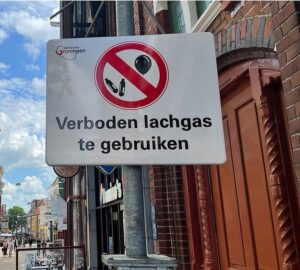
Environmental prevention in Europe
Environmental prevention policies and interventions seek to limit opportunities for unhealthy or risky behaviour or promote the availability of healthier options in order to prevent problems associated with substance use. They do so by altering the environment in ways that can unconsciously influence behaviour, thus complementing more established approaches that seek to build knowledge and skills.
A new (21 February 2018) report from the European Monitoring Centre for Drugs and Drug Addiction (EMCDDA) provides an overview of the range of environmental prevention interventions used in the substance use field and, based on a survey of prevention experts, paints a first picture of the extent to which environmental prevention measures are currently used in Europe as a starting point for future research.
Environmental prevention complements the more established approaches of providing information/warnings and skill/competence development.
Traditional substance use prevention approaches in Europe have predominantly focused on warning and informing people of the risks and consequences of drug use and/or informing them of safer ways to use substances. More recently, developmental approaches aimed at helping young people to develop the necessary social skills and competences to avoid substance use have been used alongside informational approaches.
These types of interventions focus on the individual as the main driver of behavioural change. The role of executive functions and how they develop during childhood and are influenced by upbringing is often neglected. It has been claimed that an over-reliance on approaches that fail to consider executive functions contributes to the persistence of health inequalities. Many behaviours we perform every day are automatic and are generally reactions to common and familiar stimuli, demonstrating the importance of environmental and social cues, and of automatic processes in influencing behaviour. This may explain the limited success of prevention approaches that focus solely on individual responsibility for decision-making and self-control.

What is environmental substance misuse prevention?
In the report, the EMCDDA offers a first operational definition of the concept and an initial overview of where and how such interventions are being used across Europe. The definition identifies three categories of environmental prevention measures: regulatory, economic and physical.
Environmental prevention policies and interventions build on current interest in these approaches and seek to provide a stimulus that evokes healthier decisions. This can occur through altering the design of the environment, or aspects of it, to influence choice (‘choice architecture’).
For example, physical changes may include bars providing glasses for alcohol that are taller and narrower, but with smaller volumes, tending to make people drink less. Similarly, changes to the economic environment, such as increasing the price of tobacco, may discourage smokers. Regulatory changes can include legislation to constrain undesirable behaviours, such as cannabis use in public places, under-age drinking or drinking and driving.
The web-based questionnaire at the heart of the publication generated responses from 117 subjects (from 27 countries) with knowledge of substance use environmental prevention measures.
The questionnaire considered a number of environmental prevention measures for illicit drugs, alcohol and tobacco and asked respondents whether they were available nationally or locally.
Of the 49 measures presented to the experts answering the survey, 39 referred to regulatory or economic environmental prevention measures and 10 referred to physical environmental prevention measures.
Regulatory prevention
The sale of alcohol is subject to strict licensing systems in every country. There have, of course, been massive changes around tobacco with the banning of smoking in public places in very many countries.
Economic prevention
Physical prevention
Conclusion
Of course, many of these approaches have been widely used for many years, although not classified under the banner of environmental substance misuse prevention.
Nonetheless, there are clear advantages to naming and highlighting these approaches in order to encourage policy makers to routinely consider introducing them.
Why should we not be looking to disrupt excessive or risky drug and alcohol consumption in the same way as so many other human behaviours have been subjected to rapid change in the digital age?
Innovation posts are sponsored by Socrates 360

The smart solution to communication, information, and education in secure settings and beyond.
Socrates Software is working with Probation Services, Prison Services and some of the UK’s premierprivate companies bringing innovation and life-changing improvements to the sector by providing a “mobile mentor” via tablets and smartphones for Prisons and the Transforming Rehabilitation Programme.
The Future of Resettlement
Socrates 360, mobile mentor, is a true Through-The-Gate solution for the prison/probation sector. For use by prisoners, probationers & staff.