A hidden population
What’s the definition of a restricted patient?
I thought it made sense to start with the formal definition. “A restricted patient is a mentally disordered offender (MDO) subject to a restriction order, due to the risk of serious harm they pose to others, and liable to a hospital order. They cannot be transferred between hospitals, discharged or allowed leave without consent of the Secretary of State for Justice. The First-tier Tribunal (Mental Health) in England and the Mental Health Review Tribunal for Wales can also discharge restricted patients if they conclude that the criteria for detention in hospital under the Mental Health Act 1983 is no longer met.”
Perusing the list of MoJ statistical bulletins released last Thursday 30 April (these things come in batches) mainly four times a year, I realised that I had never covered the subject of restricted patients. Apparently, the data for this hidden group only became sufficiently reliable to publish in 2013. Now, the MoJ publishes an annual statistical bulletin and a set of associated tables. The latest edition covers the data for the calendar year of 2025.
Numbers
The population of restricted patients on 31 December has continued to increase annually since 2013, except in 2020 when it fell for the first time partly due to COVID-19 disruptions. The latest figure of 7,998 is an increase on 2024, continuing the increasing trend.
The overall population consisted of 4,674 restricted patients in hospitals (a slight increase of 0.6% from last year) and 3,324 conditionally discharged patients (a slight increase of 1.4% from last year). The conditionally discharged population continues to trend upwards.
Legal status
Of the restricted patients, about 88% do not have a prison sentence (solely under restriction orders), 6% are serving life sentences, 4% are serving determinate sentences and 3% are IPP offenders. This distribution has been stable in the last 2 years since the statisticians first reported on sentence breakdown.
Demographics
At the end of 2025, about 88% of all restricted patients were males. Females constituted about 14% of the conditionally discharged population and 10% of the detained population. These proportions have been consistent with recent years.
Most restricted patients as at 31 December 2025 were in the 40-59 (48%) and 21-39 (33%) age bands.
Racial disproportionality is very evident. Black/Black British patients make up 19% of the overall restricted patient population and 17% of those in hospital. The parallel figures for Asian/Asian British patients are 8% for both groups.
The majority of patients (62% of males and 62% of females) committed offences of violence against the person. A higher proportion of females (26%) than of males (10%) committed an offence of Criminal Damage and Arson whereas a higher proportion of males (12.2%) than of females (0.6%) committed a sexual offence.
Of the 4,674 restricted patients in hospital, 29% were admitted from prison establishments, consistent with the last 6 years.
Eighty-eight admissions were to high secure hospitals, including 6 female patients.
Admissions and recalls
A total of 1,733 restricted patients were admitted (new admissions and recalls) in 2025, slightly down by 0.5% from last year. The number of admissions fluctuated between 1,500 and 1,700 from 2008 to 2022, but have been above
1,700 in each of the last three years.
The largest source of admissions was transfer from prison to hospital (65%), followed by recalls (17%) and hospital orders with restriction orders (12%). These consistently remain the major sources of admissions.
However, of the patients detained in hospital, 29% had been transferred from prison and 58% had been transferred under hospital order with restriction order, suggesting restricted patients under hospital orders stay longer in hospital than do patients transferred from prison.
Discharges and disposals
The number of authorised disposals and discharges in 2025 (1,642) is the highest in the series, representing an increase of 7% from 2015 and a slight change of 0.1% from last year. The overall number of authorised disposals and discharges has fluctuated in the last decade.
There was no change in the number of discharges into the community (614). Most of these discharges into the community were conditional discharges by tribunals (58%), consistent with previous years.
Disposal is the (lovely) term used when someone leaves treatment as a restricted patient other than as a discharge or a transfer to another hospital in England and Wales. Disposals are all other outcomes for, and movements of mentally disordered offenders (e.g., return to prison custody), other than (i) discharges and (ii) transfers to another hospital in England and Wales.
The overall number of disposals (1,028) in 2025 is also the highest in the series, but only a slight increase of 0.2% from last year. These were mainly disposals at court (45%),
returns to custody to complete sentences (20%), expiry of restrictions in hospital (15%) and remission of untried/unsentenced prisoners (15%).
The number of absolute discharges (not into hospital) was 84 (61 conversions from conditional discharges and 23 absolute discharges direct from hospital).
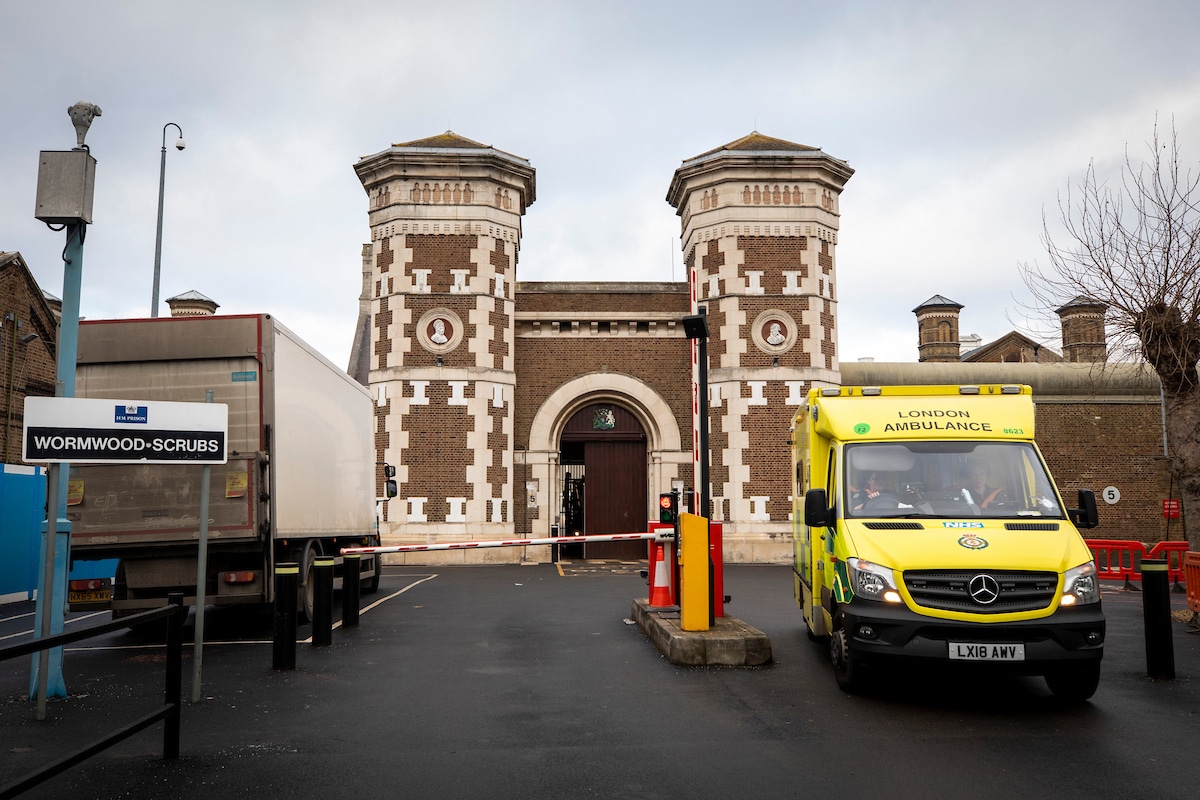
Thanks to Andy Aitchison for kind permission to use the header image in this post. You can see Andy’s work here