A system designed for women?
A new report from the drug treatment agency We are with you (@wearewithyou) explores the type of support available to women who use drugs, their experiences of treatment and ultimately, how services can be improved to support these women. The research draws on interviews with women who have accessed drug treatment services, roundtable discussions with frontline staff, a survey of relevant third sector organisations, interviews with experts in the drug treatment field and Freedom of Information Act requests to local authorities to understand the nature of service provision in their locality.
The report argues that drug-related problems unique to women have received insufficient attention in research and that women are held back from getting support by a system that often lacks the capacity and flexibility to cater for their needs. It sets out a series of recommendations for services, commissioners and policymakers to create more accessible and welcoming environments for women.
The research
The research was split into two parts, a quantitative section scoping the level of mainstream versus specialist women-only support and treatment at a local level, and picking up trends from the response to surveys conducted with third-sector organisations. The qualitative part of this research focused on 1 on 1 interviews, roundtables, surveys and literature reviews.
The quantitative research found there was a wide variation in what services local authorities provided for women who use drugs. Some areas reported an extensive and comprehensive list of interventions catering to different demographics of women, in a variety of community and clinical settings. Other local authorities had very little special provisions to engage women who use drugs.
The qualitative research which focused on engaging women with lived experience and staff that worked with them, heard many key issues and themes repeatedly raised. Interviewees talked about how women use drugs differently to men. While trauma is a big factor in both male and female substance use, relationships with a partner play a much larger role in women’s drug use. Women were more likely to be introduced to drugs by a partner, while men were more likely to be introduced by a friend. Women’s use often began out of “necessity”, as a coping mechanism, whereas we know men are more likely to first use drugs recreationally. We also heard how women were more likely to progress from first use to problematic use more quickly, a process known as ‘telescoping’.
Though women make up a much higher proportion of front-line staff working at drug services, women who use these services are underrepresented in data and research around drug use and drug treatment populations. Drug use and problems unique to women have received insufficient attention in research.

Access to services
The researchers also report how treatment services can be a daunting prospect for many women. For women with experience of domestic abuse, male-dominated services were often intimidating. Men are nearly twice as likely as women to have used drugs, and make up around three quarters of the drug treatment population in England. With much of the treatment system taken up by male long-term opiate users, the capacity to develop expertise and services to meet the needs of women, and the diversity of needs within the female population is limited.
Drug using communities are often small and it is common for women to have been in group settings with a former partner or abuser. Women who have experienced domestic abuse are eight times more likely to develop an issue with drugs than those who haven’t.
Recommendations
The report concludes with a set of recommendations for policy makers, local authorities and service providers. I have reproduced the list of recommendations for this last group below:
- involve women with lived experience in service design, delivery and evaluation
- ensure service branding is visually engaging for women and that their physical spaces are flexible, appropriate, welcoming and engaging
- provide appropriate staff training to ensure women’s needs are understood, they are provided the correct treatment pathway, and offered female-specific interventions (women’s group meetings, assessments, appointments, and other interventions (such as mental health/trauma, families and relationships support), in community settings (where possible)
- provide the option of having a female key-worker
- ensure treatment services are child and family sensitive, and can support women who need additional household and parenting support
- adopt a flexible, mixed-model of service delivery, including both digital and in-person treatment and offering choice in how women engage with services
- ensure the most experienced recovery workers are working with the women with the most intensive needs and have reduced caseloads
- improve partnership working with statutory services, including social services, police, and primary care
- improve partnership working with Black, Asian and ethnic minority community groups and organisations in order to engage women from those communities
- provide a comprehensive training programme for staff on issues relating to women who use drugs, including trauma-informed treatments
- increase the provision of mental health treatment accessible to women who use drugs
- ensure service providers have representative levels of female leadership in management roles
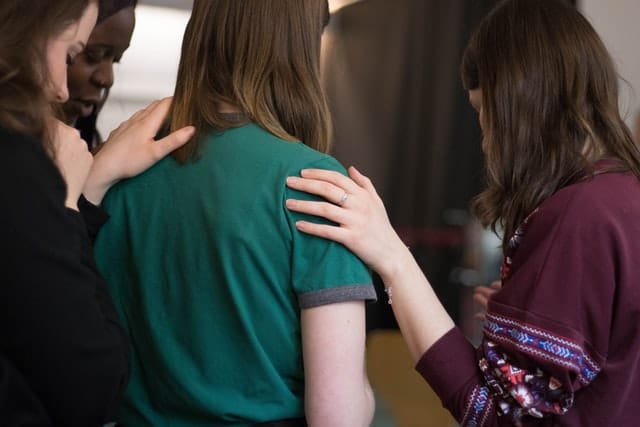
Thanks to Rosie Sun for kind permission to use the header image in this post which was previously published on Unsplash.