
Seeking Transformation
A partnership between Justice Futures and the UCL Centre for Education and Criminal Justice brought together over 70 participants to co-create a vision and blueprint for the future role of further education colleges in supporting people leaving prison or on probation into education, training and careers in the art, sports and digital industries. Together they have just (15 October 2025) published a report: Further education and the justice system seeking transformation.
These sectors were chosen because they are popular among people in the justice system but are typically overlooked in justice training provision which often focuses on construction, logistics and hospitality. The authors argue that FE colleges are well placed to support such a transformation because they are a countrywide resource offering learning opportunities well suited to many prisoners even though they currently play a minimal role in the system.
A failing system
The report is published at a time when there are grave concerns about the quality and accessibility of prison education and training for work. Probation pathways are also weak with limited opportunities for meaningful education and training through community sentences. The authors point out that for many people intersecting inequalities, including race, gender, neurodivergence, disability and stigma from criminal records, compound these barriers.
Earlier this year the report’s authors ran a number of workshops and undertook interviews and surveys which explored the current situation, pockets of innovation and the potential for a transformative future.
Participants described the current Further Education and justice systems as dire, disconnected and dysfunctional and limited by rigid policies, poor practices and systemic barriers. They were able to identify some examples of best practice where personalised, place based and partnership driven approaches were creating new possibilities.
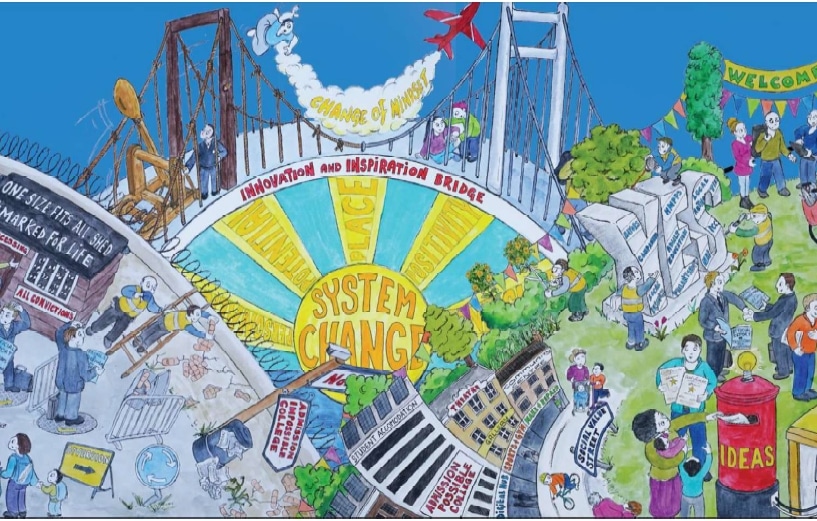
Their vision for the future focused on collaborative, people-centred systems with flexible funding, coproduced policies, inclusive admissions and genuine partnerships between Further Education, justice and employers.
Key findings
Participants identified five critical success factors for transforming FE within the justice sector:
- The mindset shift is foundational. Moving from a can’t do to a can-do culture across FE and justice systems was seen as essential to unlocking progress. A shift in the values and principles that hold systems in place is needed to underpin any transformation.
- Personalisation is critical. It was felt that “one size fits all” models fail and that there is significant value in a future system which offers multiple and flexible learning pathways.
- Partnerships drive innovation. The most promising initiatives emerged where FE, justice, charities and employers work together especially at a local and regional level.
- Sustainability matters. Short term projects were not considered sufficient; long term funding and structural change are required to embed success.
- Lived experienced leadership is vital. People with convictions must be central in designing, delivering and shaping policy.
A vision of transformation
Participants envisioned a future where:
- Every prison is connected to its local college.
- Contracts and funding are flexible, sustainable and co produced.
- Vetting and admissions processes are fair, transparent and context sensitive.
- Arts, sports and digital industries are valued as serious career pathways.
- People leaving prison or on probation receive holistic and personalised support enabling them to thrive in education and employment.
Conclusion
The report argues that a different future is not only possible but already beginning to emerge. Project participants argue that by nurturing innovation, dismantling system barriers and embedding collaboration across sectors, FE colleges and their partners can play a transformative role in reducing inequalities and improving outcomes for people leaving prison or on probation.
The header image is taken from the report and was created by Erika Flowers, artist and participant in the project.







One Response
Whistleblowing Statement & Call for Justice
I am speaking out not only for myself but for every mother, father, and single parent. Since 2011, my family and I have faced systemic failures, abuse, and neglect from social services, police, and local authorities in Waltham Forest Borough. My children were harmed, denied opportunities, and labeled unfairly, while those tasked with protecting us failed in their duties.
From 2011 until 2018, I was sexually harassed and abused by my ex-husband, and despite my repeated requests for help, social workers, the housing department, and police ignored our suffering. They pretended I wanted multiple properties, while leaving me and my children unprotected, forcing us to live with the abuser because he had nowhere else to go. Meanwhile, my children were exposed to criminal behaviors, including being introduced to cannabis and tobacco by neighbors, and their education and well-being were repeatedly threatened.
Throughout these years, authorities falsely represented my family to the government. They claimed my children were unstudious, when in reality each of them achieved seven years of music education, passing multiple grade exams. They denied my son disability support for years, closed his PIP claim despite clear evidence, and even labeled me as having mental health issues to justify neglect. All the while, families like mine remained trapped in unsafe conditions, facing eviction, property neglect, and systemic abuse.
We have lived through a system that promised protection but delivered harm. Social workers, youth services, and the police repeatedly acted in ways that targeted my family rather than safeguarded us. Children were labeled as “gangsters” for behaviors stemming from abuse and trauma, not criminal intent. Opportunities for education, work, and meaningful support were denied, while authorities received payment to oversee these failures. This is modern systemic slavery.
Today, as my son turns 18 and faces court over circumstances entirely created by systemic neglect, I continue seeking justice. I share this not only to expose the failures we endured but to warn other parents: do not rely on authorities to protect you — go directly to the courts. Systems designed to safeguard families can instead perpetuate harm when profit, bureaucracy, and power replace care.
I want to share my story with those working on transforming justice and education systems because it exemplifies the urgent need for change. As the recent report “Further Education and the Justice System: Seeking Transformation” highlights, meaningful education, training, and opportunity must reach those intersecting with inequalities, including neurodivergence, disability, and systemic stigma. My children’s experiences show that, without oversight and genuine accountability, systems fail the most vulnerable.
I hope that by sharing this, advocates, educators, and policymakers will understand the human cost of inaction. My family’s story is a call to prioritize justice, personalized support, and accountability — so that no other family has to endure what we did. I continue seeking justice today, with the full awareness that change is possible, and that the system must be held responsible for its failures.
Additionally
My son has been directly affected by the systemic failures of Waltham Forest Borough. From a young age, he was exposed to harmful environments, including neighbors introducing him to cannabis and tobacco when he was only 12 years old. Despite my repeated requests for help, authorities failed to intervene effectively. Instead, they labeled him unfairly as antisocial or a “gangster” simply because of circumstances beyond his control, including the abuse and neglect he witnessed. Even after he turned 18, the same system continued to punish him: he was stopped by police and threatened over £500 that was legally and rightfully his, money given to him by his family to buy a birthday gift. This punishment is emblematic of how authorities repeatedly failed to protect him — instead of safeguarding his safety, education, and well-being, they monitored, targeted, and criminalized him. Despite promises to protect my children, the authorities have caused him harm, disrupted his life, and denied him opportunities for growth and support.