
Criminal Justice
Help map restorative justice services in England and Wales
Restorative Justice Council has commissioned ICPR to map all restorative justice service in the criminal justice system in England and Wales. Get involved.

Restorative Justice Council has commissioned ICPR to map all restorative justice service in the criminal justice system in England and Wales. Get involved.

It appears that there is a growing evidence base of the potential benefits of RJ for victims of sexual violence, depending on a number of issues which are addressed with some care in this guidance.

A victim’s guide to restorative justice is a new film for victims of crime explaining the different points in the criminal justice system where they can access restorative justice. It also tells them who they can contact if they want to make use of this approach.

This would benefit victims, offenders and the wider public. It would have the additional benefit of being popular. Polling shows that 75% of the public think that every victim of crime should have the right to meet their offender. Surely no politician can ignore that level of public support?

Police officers will use their professional judgement to assess an offence, taking into account the wishes of the victim and the offender’s history, in order to reach an outcome which best meets the needs of the victim and of the public. Of course, many police services have been using these community resolutions

The Ministry of Justice has become increasingly committed to Restorative Justice over recent years. There was considerable emphasis on RJ in the recently completed Transforming Rehabilitation process with new providers urged to include restorative work and the police use of community resolutions is to be expanded.

Perhaps the most concrete of the commitments in this document is the plan to consult on a new compensation system which would mean that victims received compensation on conviction, rather than having to wait for months and years “as and when the offender is able to pay.”

Peer Courts are basically community led, problem solving courts which are focused on young people. They provide disposals outside the criminal justice system for young people who have committed minor offences. They mainly work with first time offenders as a means to delay entry into the formal criminal justice system.
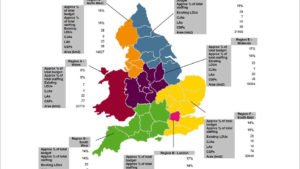
On 7 February, the MoJ issued an updated version of the Target Operating Model (TOM) for the new probation system. TOM2 is 74 pages long and gives a very detailed description of the current MoJ vision of how reducing reoffending will work from 2015 onwards.
The key words emphasised in the introduction are: Quality; Efficiency; Flexibility; Public Protection; Partnership and Standards.
There has been a great deal of political and media activity around punishment recently. Not a month seems to go by without a new announcement about how prison regimes will be toughened up. So it was refreshing that last week was Restorative Justice week.