
Innovation
New app provides comprehensive support for offenders
New app being trialled in prisons and the community supports desistance through helping offenders with education, employment, health and much more.

New app being trialled in prisons and the community supports desistance through helping offenders with education, employment, health and much more.

Excellent initiative from Probation Board of Northern Ireland pioneers the use of an app to promote desistance and help with mental health & addiction issues.

New toolkit for Clinks explores a shared evidence base as a way of measuring desistance with women offenders.

How user-focused organisations go the extra mile to help recovering drug users and offenders get into work and turn their lives around.

Fascinating new book by Doctor Hannah Graham explores how probation officers resolve conflicts between their own values & the requirements of their organisation

Embedding desistance practice The timing of the Probation Inspectorate’s new thematic inspection on desistance and young people could hardly be better. Published on 24 May

Perhaps their most important conclusion is the contention that probation practice should focus more on helping sex offenders move forward, away from a life of crime rather than continuously re-examining past offences.

Understanding the whole person The Revolving Doors Agency has just (26 November 2015) published the first in a series of literature reviews on severe and multiple
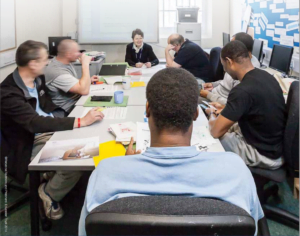
This finding gives hope to the value of Mr Gove’s review; if the quality and availability of prison education can be improved, it appears that there are large numbers of prisoners committed to making a positive change to their lives with education a keystone to that progress.

It is surprising that in 2015, there is almost no British research of sufficient high quality to inform best practice in reducing women’s offending. There is a particular need to develop an effective evidence base around what works in helping women to desist from violent crime.

I can foresee a situation in the near future where the MoJ links its own funding to participation in the Justice Data Lab and puts pressure on other funders to do the same.

While overcoming difficulties was a part of their journey towards the good life, goals such as a home and healthy relationships were as important to these individuals as most people who don’t face their challenges. The report is enlivened by a range of collages which were the key tool used by participants to express their aspirations.