
This is a guest blog by Clare Birtwistle of Manchester Metropolitan University.
Children in care need care
I am not a criminal. Sure, I have seventeen convictions to my name, but the reality is that I am just one of millions of people who have been let down by misinformed policies, biased interventions, and overstretched services that were supposed to help us. Sixteen of my convictions were committed whilst I was Looked After Child (LAC)1, and I am not alone. Research shows:
- One in three LAC receive a conviction or caution by age 17, compared to just 4% of their non-care experienced (NCE) peers (Ministry of Justice, 2024)
- Over half will have a conviction by age 24, compared to one-tenth of NCE peers (Children’s Commissioner, 2022)
- LAC are eight times more likely to receive a youth justice caution or conviction than NCE children (Hunter, Francis, & Fitzpatrick, 2023)
- LAC are over ten times more likely to receive a custodial sentence than youth offenders who are not in care (ONS, 2022)
This needs to change. This blog explores two key issues affecting LAC in the Criminal Justice System (CJS) in England and Wales and proposes possible solutions.
Problem 1: Criminalisation of Looked After Children
Adolescents naturally engage in risk-taking behaviour which, for some, can lead to criminal activity. The infographic below shows some factors that have been repeatedly identified in research as heightening a child’s risk of involvement in criminal behaviour:
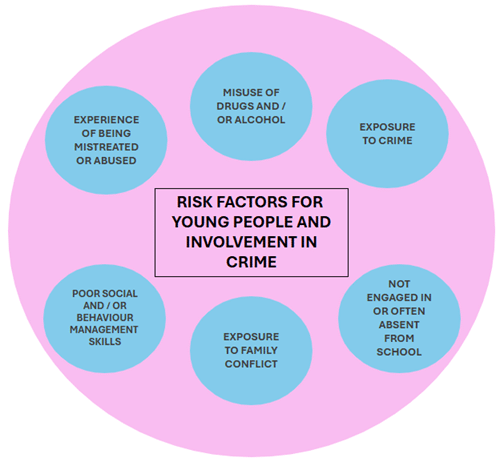
This research demonstrates that LAC are disproportionately at risk due to multiple factors:
- LAC are four times more likely to use drugs or alcohol
- 81% of LAC in custody were previously suspended from school
- 8 in 10 LAC have special educational needs
- The primary reason for children being placed in care is due to them being victims of abuse or neglect
Furthermore, qualitative research has identified that local authority carers have been known to escalate or exaggerate poor behaviour to meet criminal thresholds, involving police for respite instead of managing the behaviour informally. Current policing strategy argues that the CJS are being used to handle issues that would ordinally fall under parenting, and that professionals should be asking themselves if they would behave in the same manner if it were their own children.
Problem 2: Multi-Agency Approach
The transition into care can be traumatic, causing difficulties with trust and attachment. During this time, LAC are forced to navigate a system of adults with differing beliefs, training, and guidelines, all of whom exert some kind of control over the LAC’s life. The evidence base shows that too much control from adults can reduce the opportunities for children to learn for themselves, leaving them with feelings of powerless which can lead to self-destructive behaviours such as going missing, using drugs and alcohol and getting involved in anti-social behaviour. Engaging in these behaviours perpetuates a vicious cycle of increased adult intervention and mismanagement, along with perennial issues in building positive relationships with those who have the resources to support them. In addition, during regular care reviews, LAC are often spoken about, not to, which can reinforce negative expectations and contribute to a self-fulfilling prophecy.
Possible Solutions
Implement a Buddy System for Looked After Children
LAC have a legal right to a Buddy, yet approximately two-thirds do not receive one. Research has consistently found that LAC who were able to build a personal bond with a trusted adult were less likely to engage in risky behaviour, and more emotionally resilient. LAC often lack a positive role model and having one central person to turn to could make a lot of difference to their ability to navigate the care system.
A successful Buddy system should:
- Pair LAC with a Buddy who has lived experience, and significant experience of working with young people
- Buddy should be a trained Appropriate Adult, so the LAC can use them should they ever need and want to in legal proceedings
- Be voluntary, demonstrating genuine investment in the child’s success
- Allow LAC to choose their Buddy to promote autonomy
- Encourage the LAC’s positive hobbies and interests
- Provide consistent support, even as placements change
- Empower LAC to be heard in all discussions about them
- Be child-first and trauma-informed
Wipe Childhood Criminal Records When Spent
LAC face disproportionate criminalisation at a vulnerable stage in life. Childhood offending often stems from learned behaviour, requiring time and support to unlearn. Since brain development continues into the mid-to-late 20’s, all young offenders should be given the opportunity to reform. The period of time for convictions to become spent is reflective of the severity of the crime, therefore it is fair to use this timing as the guideline to wipe the offence records to support desistance. Raising the age of criminal responsibility and stopping children from being tried as adults would further support a fairer system.
Conclusion
LAC are placed in situations beyond their control that heighten their risk of criminalisation. Without proper support this behaviour escalates, resulting in lifelong consequences. The proposed solutions – a working Buddy system and automatic expungement of childhood records once spent – would provide LAC with the stability and second chances they deserve. By implementing these changes, we can move toward a justice system that prioritises rehabilitation over punishment, ensuring that no child is penalised indefinitely for their past.
If you would like to get in touch with Clare to discuss the issues raised in this blog post, please email her supervisor: Anne-Marie Day.
Thanks to Annie Williams for kind permission to use the header image in this post which was previously published on Unsplash.