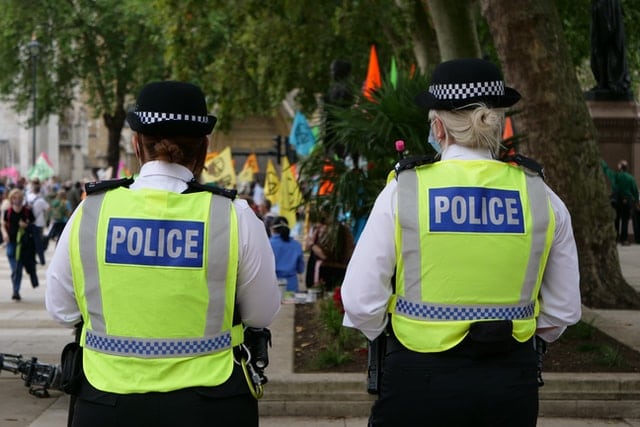
Police protection
Police protection under Section 46 of the Children Act 1989 is a vital emergency safeguarding power – but it is also far-reaching and subject to little oversight. A new (November 2025) evidence and practice briefing from the Centre for Justice Innovation aims to provide a comprehensive overview of police protection. This research, based on Freedom of Information data and stakeholder interviews, suggests a wide variation across forces in how police protection is used, how children are accommodated, and how long they remain in police custody.
The legal framework
Police protection was introduced in section 46 of the 1989 Children Act3 to address the gap in emergency safeguarding provisions, giving police the lawful authority to intervene in urgent situations, where a child is at risk and a court order can’t be sought quickly enough for their protection.
The Act stipulates that a constable may remove a child or prevent a child from being removed from somewhere (such as a hospital), if they have reasonable cause to believe that they would otherwise be “likely to suffer significant harm”. The power is subject to a number of conditions and limited to 72 hours.
While the designated officer will not have parental responsibilities for the child during this time, they shall “do what is reasonable in all the circumstances of the case for the purpose of safeguarding or promoting the child’s welfare”. The wording in the Act specifies that when a child is removed, they must be taken to “suitable accommodation”.
The use of the power also entails an obligation for the constable to keep the local authority fully informed.
The use of police protection
29 police forces (covering 67% of the population) replied to Freedom of Information Requests. The total number of police protection incidents across this area in 2024 was 8,050, which if extrapolated to the whole of England and Wales, would mean a total of approximately 12,000 uses of the power in 2024. Rates of use per capita varied substantially between different forces. The highest rate was 25.6 incidences per 10,000 children residing in the area, and the lowest was 0.75 per 10,000, suggesting a wide variation in usage between different forces.
One key variation was the definition of “suitable accommodation”. Two forces stated explicitly that police stations should never be used to hold children under police protection. A further two said stations could be used as a last resort but not overnight. The largest group, eight forces, stressed that police stations should only be used in very exceptional circumstances. In contrast, five forces made no mention of the police station being a “last resort”.
In terms of the provisions available to accommodate children, there seemed to be an innate tension between having a dedicated space to accommodate children under police protection and trying to adhere to the principle that police stations were not suitable environments for them under the power.
Four forces reported that they had created child-friendly spaces with toys and entertainment, and five had facilities with beds and other amenities, such as “suites where provisions include: bedding, toiletries, clothing, food, fold out bed.” However, seven forces had no dedicated spaces for this and instead used spaces deemed most appropriate, such as canteens or witness rooms. Three described either using hotels or having arrangements with local authorities.
Concerns
Police practitioners and safeguarding experts in the National Police Chiefs’ Council and the College of Policing raised a number of urgent concerns including the inappropriateness of existing provision with particular attention paid to inadequate physical spaces and training.
Additionally, concerns were raised about inconsistent use of the power across different forces and, in particular, that police protection is sometimes being used in unnecessary circumstances. Stakeholders raised several factors which might be contributing to unnecessary use:
- institutional fears of potential risks of a failure to act, and preference for “positive action”;
- limited or absent training on the use of police protection for officers;
- shortfalls in multiagency collaboration and contingency planning, where a child is already known to agencies;
- unavailability of children’s services emergency duty teams, which means that police can lack the opportunity to draw on expertise to inform out-of-hours decision-making; and
- a lack of data capture around key details of police protection, such as the length of time that children are held for which creates a context in which there is little accountability and monitoring.
Conclusions
The briefing concludes that police protection is an important emergency safeguarding tool, but the wide-ranging power and lack of oversight create a risk of excessive and inconsistent use. It says that reports of over-reliance on police to care for children in need of emergency safeguarding are particularly concerning.
The striking variance between police forces in how frequently they use these powers, how they are implemented, and what provisions are in place for children highlights the risk of inadequate practice in some areas.
While guidance is clear that police protection should be exceptional and time-limited, in practice, operational pressures, resource constraints and risk aversion mean that children may still spend prolonged periods in unsuitable spaces and, in certain cases, are being repeatedly subject to police protection.
There appears to be no clear remedy for this situation and the Centre for Justice Innovation says it intends to undertake further research in order to highlight best practice. It is keen to hear from any practitioners with an interest in sharing their experiences or working with the Centre on this issue.