Facebook Twitter Gplus Pinterest LinkedIn E-mail RSS


Facebook Twitter Gplus Pinterest LinkedIn E-mail RSS
Home Posts tagged "drug treatment"

Online surveys are the key to better drug treatment services

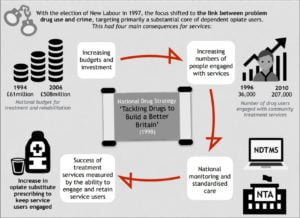
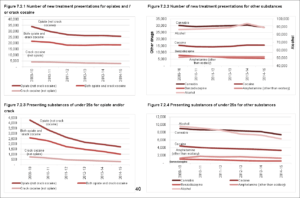
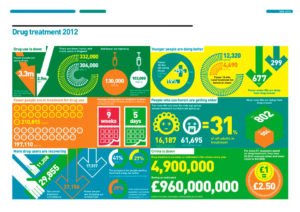
I’m just embarking on a new substance misuse needs assessment. Drug needs assessments are the single most important component in getting local drug treatment systems right. You can’t design a treatment system to meet local needs unless you’re sure what those needs are. When I do a needs assessment, I use a fairly straightforward approach which triangulates findings from three main sources: Data systems Drug workers and other professionals Drug users By far the most important source of information are drug users themselves. Patterns and trends of drug use, prices and availability all change rapidly, all the time. It takes time to plan or change a drug treatment system so it’s important that the information in the needs assessment is as up-to-date as possible. Drug treatment data systems provide good information on the drugs used by  people who have developed

Read the full post here

 
 Share on Facebook Share on Twitter Share on Reddit Share on LinkedIn
1 Comment  comments 

Why the drug treatment sector must get on board with PbR

‘Payment by results’ is an approach to funding public services which mirrors how we pay for a meal in a restaurant. We typically give a healthy tip if we like the food and service, but demand they take the cost off the bill if it’s not what we ordered, or the food is cold or defective in some other way. Organisations providing services under PbR will make a healthy premium if they reduce offending or drug use by more than the norm, but won’t get paid in full if they fail to reach their agreed outcomes. From a Government point of view, it’s hard to see the downside of PbR – it transfers risk, draws in private investment and ensures that public funding programmes actually achieve their objectives (or the money stays in the Treasury). I’m reliably informed that the

Read the full post here

 
 Share on Facebook Share on Twitter Share on Reddit Share on LinkedIn
No Comments  comments 

Mind the (social aspiration) gap

One of the most fulfilling side-effects of writing a Blog is that you are more aware of and tend to read more blogs yourself. I recently discovered a new blog which has quickly become one of my favourites. Matthew Taylor, the Chief Executive of the Royal Society of Arts,  somehow finds time to write new posts 3-4 times a week. The reason I value these posts is that they are always thought-provoking and challenge readers to engage with core issues about society, politics or even what it means to be human. His latest blog encourages the Government and politicians generally to construct a broader, more meaningful future for the country. He calls for a national strategy which would articulate what sort of country we want to be and gives examples of other national identities. For example: Sweden – world class public

Read the full post here

 
 Share on Facebook Share on Twitter Share on Reddit Share on LinkedIn
No Comments  comments 

First Commandment of PbR: Thou shall not pay twice

In the new PbR culture, just like in the Premier league, it’s results wot count. However, one of the difficulties that is starting to occupy the minds of commissioners is that, unlike in sport, even initiatives targeted at the most intractable social problems start with some points on the board. No commissioner wants to pay for outcomes that would have happened anyway. For example, the re-offending rates for short-term prisoners in particular are a huge social concern; the latest figures from the Ministry of Justice (for the first quarter of 2008) show that 61.1% of offenders serving prison sentences of less than 12 months are reconvicted within one year of release. Nonetheless, it’s pretty obvious that almost two out of five are not reconvicted. The MoJ does not want to pay those providing rehabilitation services for these successes and that

Read the full post here

 
 Share on Facebook Share on Twitter Share on Reddit Share on LinkedIn
6 Comments  comments 

Drug treatment, PbR and service user choice – it’s simple

There are a lot of criticisms that can be levied at the payment by results approach. Some commentators are opposed in principle, Laurence Demarco, the founder and director of Senscot (a network of Scottish social enterprises) was the latest to voice his concerns yesterday. Others are concerned about practical issues, many of them discussed in posts on this site – how do you agree bullet-proof outcomes, develop innovative approaches, and share out payments between multiple providers? However, there are definite strengths to the approach as well. What I like about PbR is that it challenges all of us who say “We know how to tackle social problems, just give us the resources”, to prove our case. Take, for example, the latest paper from the Recovery Partnership (an alliance between Recovery Group UK, the Substance Misuse Skills Consortium and DrugScope) which was discussed at

Read the full post here

 
 Share on Facebook Share on Twitter Share on Reddit Share on LinkedIn
No Comments  comments 

There’s more to Facebook than organising revolutions and riots

Back in the 1980s the answer to everything was 42. Douglas Adams’ joke “ultimate answer to the ultimate question of life, the universe, and everything” started off as a cult among schoolboys (and one or two schoolgirls), and spread to computer science geeks before entering the mainstream via the Internet. New research in 2011 has revealed that ‘42’ is no longer accurate – it now appears that the answer to everything is ‘social media’. Social media (or occasionally just Facebook, Twitter or Blackberry messaging) have been deemed to be the prime drivers behind events and developments as wide-ranging as: Social revolutions in the Middle East a.k.a. the Arab Spring Riots on British streets – and organising the clean-up Encouraging young people’s drug and alcohol use The penetration of social network use into everyday life in the UK continues to rise

Read the full post here

 
 Share on Facebook Share on Twitter Share on Reddit Share on LinkedIn
3 Comments  comments